
What Happens When the Iron Throne Cannot Repay Its Debts?
The iron throne debt crisis could destabilize the entire political structure of Westeros. When the crown cannot repay the Iron Bank of Braavos, the consequences extend far beyond financial embarrassment. In Westeros, defaulting on debt does not lead to negotiation — it leads to replacement.
It’s not just that the Seven Kingdoms run out of gold. The moment payments stop, the Iron Bank funds the Crown’s enemies and helps install a new ruler who promises to repay every coin.
The Bank’s famous motto—“The Iron Bank will have its due”—is not a threat. It is a guarantee.
Many believe a king is safe behind castle walls, armies, and dragons. Westeros proves otherwise. Financial power can be deadlier than any blade. Below is exactly how debt, loans, and gold are used to bring even the mightiest royal houses—like the Lannisters—to their knees.
KEY TAKEAWAYS
-
Regime Change Is the Main Outcome
-
Money Turns Into Military Power
-
Financial Isolation Follows Default
-
The Lannister Reputation Collapses
-
Internal Collapse Multiplies the Damage
What Happens During an Iron Throne Debt Crisis?
If the Iron Throne cannot repay its debts, the Iron Bank of Braavos funds rival claimants, cripples trade, and turns the ruling king into a financial outcast. Default almost always leads to civil war, starvation, and the fall of the sitting ruler.
The Iron Bank: Power and Reputation
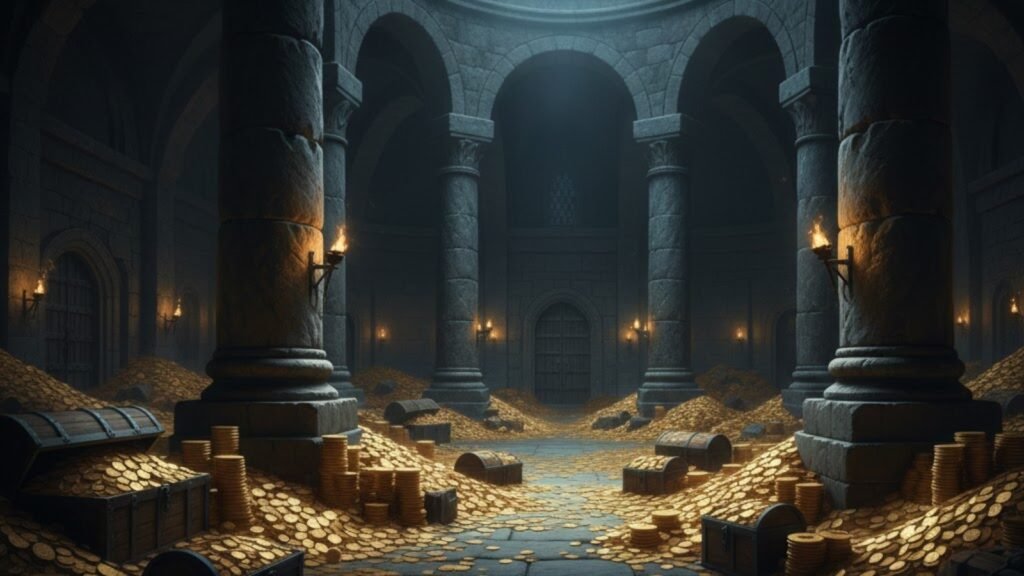
The Iron Bank Will Have Its Due
This phrase defines the Bank’s identity. Debts are always collected, no matter who rules. Kings rise and fall, but contracts remain. The Bank does not care who sits the throne—it cares only about repayment.
Iron Throne Debt Crisis: Origins and Consequences
Origin of the Debt
The crisis began under King Robert Baratheon. Extravagant spending drained the treasury, and years of war made matters far worse.
The Lannister Myth
House Lannister claimed, “A Lannister always pays his debts.” This promise kept lenders confident—even after the Crown was already broke.
Deep Lore Detail: The Exhausted Mines
The truth is darker. The gold mines of Casterly Rock are empty. Without fresh gold, Lannister credit becomes meaningless.
Primary Consequence: Funding the Enemy
Subversion and Regime Change
If a ruler refuses to repay, the Bank funds someone else who will.
Case Study: Stannis Baratheon
After Tywin Lannister’s death, Cersei halts payments. The Iron Bank backs Stannis Baratheon, funding his war effort.
The War Economy and Financial Isolation
Iron Bank gold becomes swords, ships, and armies. Mercenary forces fight for whoever pays.
Secondary Consequences: Internal Chaos
Internal Creditors and Their Impact
Iron Bank, Faith of the Seven, and House Lannister all pressure the Crown.
Deep Lore: Why the Iron Bank Is Feared
The Bank’s reputation alone enforces obedience. Fear replaces force.
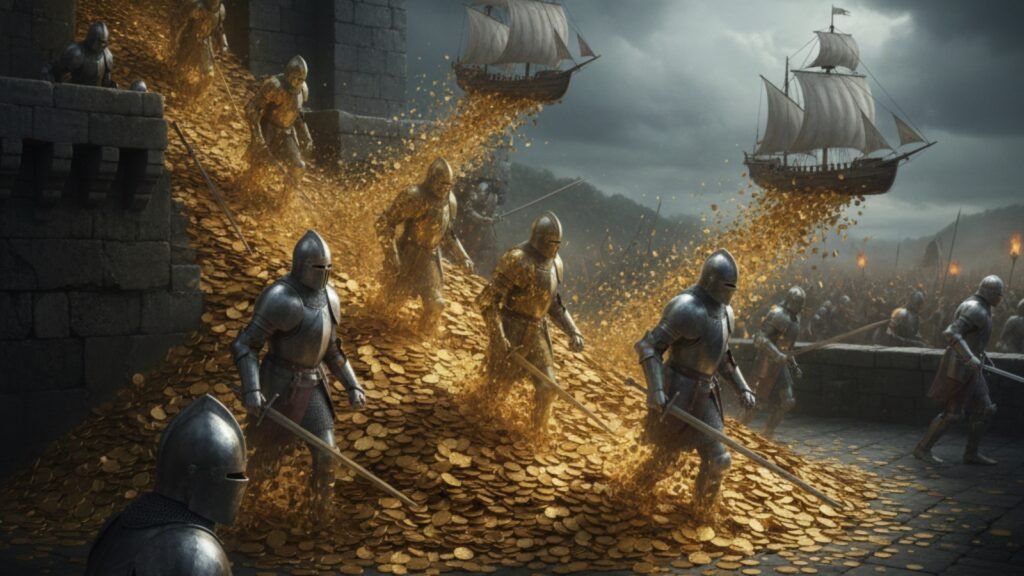
Political Fallout of the Iron Throne Debt Crisis
The iron throne debt crisis would trigger political instability across the Seven Kingdoms. Powerful houses might reconsider their loyalty if the Crown can no longer guarantee financial security. Mercenary companies funded by the Iron Bank could shift the balance of power overnight. Civil unrest would likely erupt in King’s Landing as taxes rise and confidence collapses. When royal credit fails, alliances fracture and opportunistic rivals emerge. In Westeros, debt is never just economic — it is a weapon.
Conclusion
-
Gold controls power in Westeros
-
The Iron Bank rules through debt
-
Default leads to overthrow
-
Losing gold means losing the crown
Ultimately, the iron throne debt crisis would reshape alliances, ignite wars, and determine who truly rules Westeros. In the world of Westeros, power is not only forged in fire — it is financed in gold. The iron throne debt crisis proves that financial strength often matters more than dragons or armies.