
How Raymun and Rowan Quietly Reshaped the Meaning of Power in A Knight of the Seven Kingdoms
Raymun Fossoway analysis reveals one of the most surprising character transformations in A Knight of the Seven Kingdoms season 1. When people talk about who won season 1 of A Knight of the Seven Kingdoms, the conversation usually begins with princes, heirs, and the aftermath of Baelor Targaryen’s death. But a closer look at the trial of seven aftermath reveals something far more radical.
The real shift in power didn’t happen at court.
It happened on the margins.
This A Knight of the Seven Kingdoms season 1 character analysis explores how Raymun Fossoway and Rowan — two figures who began the story with almost no status — ended the season redefining what power actually means in Westeros. Among all A Knight of the Seven Kingdoms season 1 characters, their transformation feels the most quietly revolutionary.
Power After the Trial of Seven
The Trial of Seven was more than a spectacle. It altered succession lines, shattered reputations, and exposed the moral fractures within noble houses. But beyond the political tremors, the emotional and social consequences were just as significant — something this season 1 ending explained in subtle but powerful ways.
While princes argued over legitimacy and honor, two overlooked characters quietly transformed their futures.
To understand why Raymun and Rowan matter, we first have to understand what power traditionally looks like in Westeros: inheritance, bloodline, banners, and birthright.
Neither of them had any of those advantages.
And yet, by season’s end, both stood stronger than many highborn lords — making them two of the unexpected A Knight of the Seven Kingdoms winners.
Raymun Fossoway Analysis: The Birth of the Green Apple
If you’re searching for A Knight of the Seven Kingdoms Raymun Fossoway, his arc may be one of the most surprising in season 1.
At the beginning, Raymun exists in the shadow of his cousin, Ser Steffon Fossoway. A squire from a lesser branch of House Fossoway, he lacks authority, confidence, and independence. But everything changes during the Raymun Fossoway Trial of Seven moment.
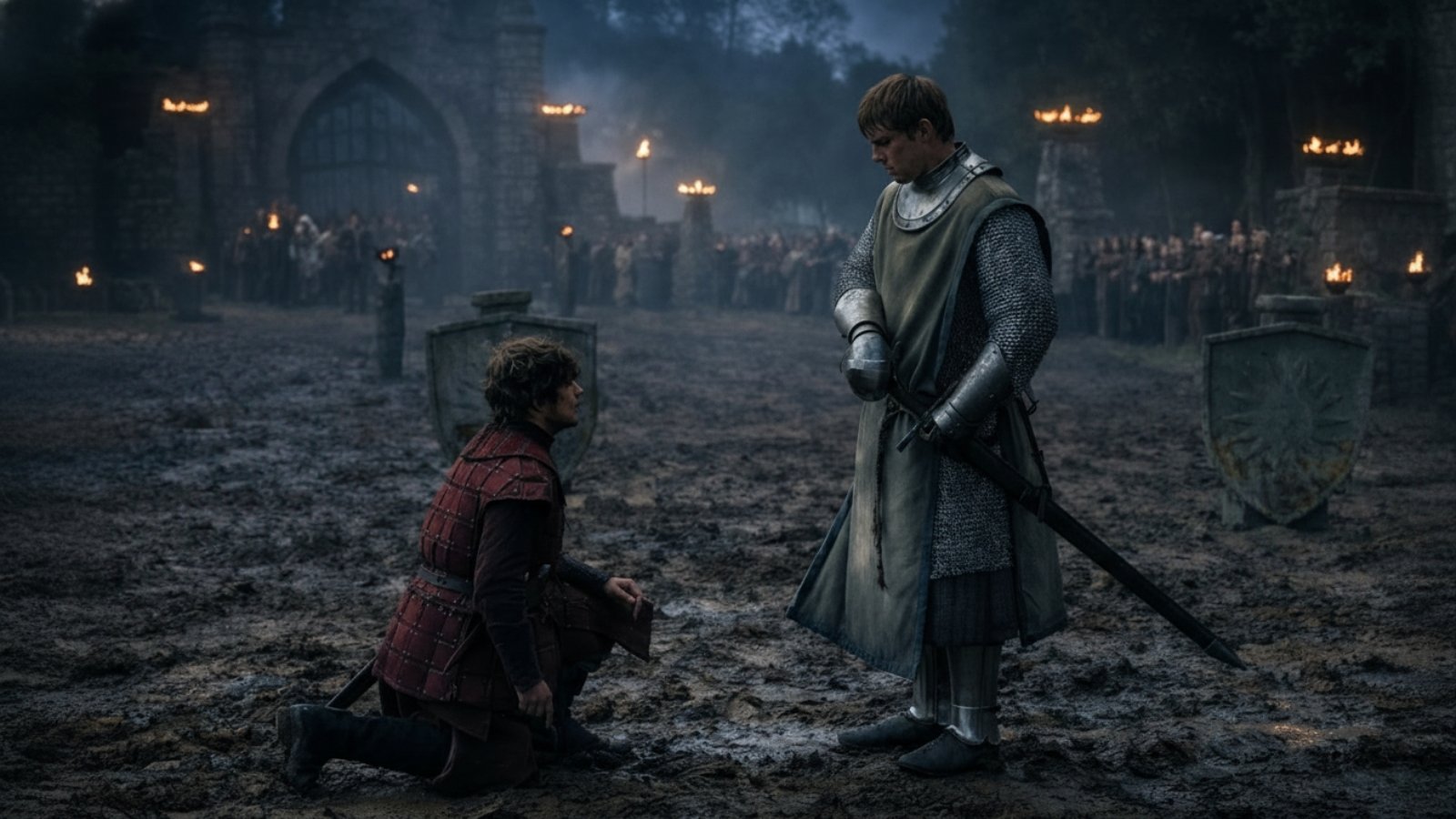
When Steffon betrays his convictions and switches sides for personal gain, Raymun makes the opposite choice. That decision becomes the foundation of his transformation — culminating in the unforgettable Raymun Fossoway knighted scene, where his loyalty is rewarded not with inheritance, but with earned honor.
The most powerful symbol of that change comes in the form of a shield.
House Fossoway Green Apple Explained
During the trial, Raymun repaints the red apple of House Fossoway into green. This act creates a new branch — the Green Apple Fossoways.
The House Fossoway green apple explained is not just a matter of heraldry. The Raymun Fossoway green apple symbolizes moral separation. Raymun is rejecting not just his cousin’s authority, but the corruption tied to ambition without honor.
By the end of the season:
- He is knighted.
- He becomes head of a new house.
- He earns loyalty rather than inheriting it.
- He gains allies in Dunk and Egg.
- He establishes independence from his bully cousin.
The Raymun Fossoway season 1 ending is not about political dominance. It’s about self-definition.
He didn’t inherit power.
He chose it.
This Raymun Fossoway analysis highlights how his decision during the Trial of Seven permanently changed his status in Westeros.
Rowan Fossoway Explained: Agency in a Rigid World
If Raymun’s arc is about identity, Rowan’s journey is about agency.
For viewers asking who is Rowan in A Knight of the Seven Kingdoms, she first appears simply as “Red.” The Rowan “Red” character in A Knight of the Seven Kingdoms represents those of low birth navigating survival in a rigid social hierarchy.
Yet Rowan is far from passive.
Throughout the season, she observes, adapts, and ultimately makes a decisive move after the trial. The evolving Rowan and Raymun relationship becomes one of the most interesting emotional threads in the finale.
Rowan and Raymun Relationship
After helping Raymun remove his armor, their connection deepens. Soon, Rowan reveals she is pregnant and becomes his wife. Whether viewers debate the timing or certainty of that claim is beside the point.
What matters is this:
Rowan moves from the social margins into nobility within a single season.
The Rowan Fossoway explained arc shows a character who refuses to remain confined by birth status. By aligning herself with Raymun’s rising branch, she ensures her own security and influence.
Unlike traditional Westerosi power structures, Rowan’s ascent is not sanctioned by lineage.
It is negotiated.
And in that negotiation lies her strength.
A Knight of the Seven Kingdoms Season 1 Character Analysis: Redefining Power
In many ways, this A Knight of the Seven Kingdoms season 1 character analysis differs from a standard recap.
The show does not present Raymun and Rowan as conquerors. It presents them as proof that power in Westeros can be reshaped.
Compare this to Game of Thrones or House of the Dragon, where victory usually means military dominance or dynastic survival.
Here, power means:
- Moral conviction over convenience
- Independence over inheritance
- Partnership over hierarchy
The trial of seven aftermath highlights this shift perfectly. While princes lost fathers and heirs shifted places, Raymun and Rowan gained something more sustainable: autonomy.
Who Won Season 1 of A Knight of the Seven Kingdoms?
If someone asks, “Who won season 1 of A Knight of the Seven Kingdoms?” the easy answer might be Dunk for surviving.
But the more interesting answer is Raymun and Rowan.
They didn’t win by defeating dragons.
They won by redefining the rules.
Among all A Knight of the Seven Kingdoms season 1 characters, their rise feels the most thematically important.
What This Means for Season 2
Speculation about A Knight of the Seven Kingdoms season 2 Raymun developments is already circulating. With House Fossoway of New Barrel established, the Green Apple branch may play a larger role in future political shifts.
Rowan’s position as Lady Fossoway also opens narrative doors:
- Will her past be used against her?
- Can a splinter house survive court politics?
- Will Raymun’s idealism hold under pressure?
If season 1 was about transformation, season 2 may test whether that transformation can endure — and whether these unlikely winners can maintain their autonomy.
Final Thoughts
Season 1 focused heavily on the Trial of Seven, succession drama, and the emotional fallout of Baelor Targaryen’s death. But beneath the spectacle, a quieter revolution unfolded — one that this season 1 ending explained through character growth rather than political conquest.
Raymun Fossoway stepped out of a cousin’s shadow and forged a new identity. Ultimately, this Raymun Fossoway analysis proves that real power in Westeros comes from choice rather than inheritance.
Rowan claimed space in a system designed to exclude her.
Together, they didn’t just climb Westeros’ ladder — they challenged how that ladder works.
And in a world obsessed with crowns, that may be the most radical victory of all.