
Triarchy in House of the Dragon: Lore, History & Power
The smoke had barely cleared from the Battle of the Gullet before fans started asking the same question: who exactly torched the realm’s most powerful fleet? The answer points across the Narrow Sea to a coalition that few casual viewers fully understand.
If you’ve been wondering about the triarchy in House of the Dragon, you’re not alone. This alliance of Free Cities has quietly become one of the most important players in the Dance of the Dragons.
So what is the triarchy in House of the Dragon? It’s a political and military powerhouse that reshaped the war for the Iron Throne and the show has made some bold changes to its source material along the way.
This guide breaks down the Triarchy’s origins, its bloody clashes with the Targaryens, and the shocking creative liberties taken with one of its key figures. Let’s dive into the lore.
What Is the Triarchy in House of the Dragon?
The Triarchy is an alliance of three of the Free Cities: Lys, Myr, and Tyrosh. Sometimes called the Kingdom of the Three Daughters (or simply “the Three Daughters”), it sits across the Narrow Sea from Westeros.
These three cities are ruled collectively by a High Council of 33 magisters wealthy, scheming politicians who govern through trade, coin, and ruthless ambition. There’s no single king here. Power is shared, bartered, and frequently betrayed.
The alliance originally formed for one practical reason: survival. The three cities banded together to resist their mutual rival, the mighty city of Volantis, the oldest and proudest of the Free Cities.
Once united, the Triarchy turned its attention outward. Its fleets came to dominate the Stepstones a chain of disputed islands between Westeros and Essos that controls vital shipping lanes.
That control would put them on a direct collision course with House Targaryen.
The Bloody History: Corlys Velaryon, Daemon Targaryen, and the Stepstones
Long before the Triarchy joined the war for the Iron Throne, it was the Targaryens’ enemy. The conflict began in Season 1 with the brutal War for the Stepstones.
The Triarchy seized the islands and installed a fearsome commander known as Craghas Drahar nicknamed the Crabfeeder. His signature horror? Nailing captured sailors and prisoners to the tidal flats, leaving them to drown or be eaten alive by crabs.
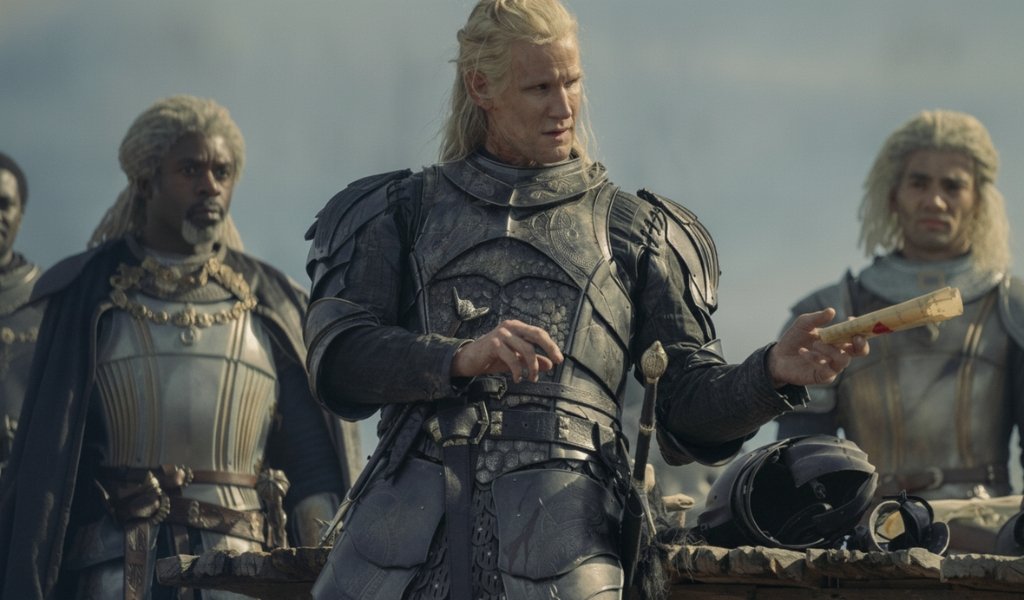
The Triarchy also choked Westerosi trade. Greedy tolls and aggressive trade blocks strangled the shipping routes that made House Velaryon rich.
This is what drove Corlys Velaryon, the Sea Snake and Lord of Driftmarth, to action. Frustrated by the crown’s inaction, he allied with the king’s restless brother, Daemon Targaryen, to take the Stepstones by force.
The war was long and grinding. But it reached its climax when Daemon, in one of Season 1’s most memorable sequences, charged the Crabfeeder’s cave alone emerging dragging the warlord’s hacked-apart body behind him.
The victory was costly and the peace fragile. The Stepstones never stayed quiet for long, and the Triarchy never forgot the humiliation.
Cracking the Blockade: Why the Triarchy Joined the Greens
By Season 2, the realm had split between the Blacks (Rhaenyra’s faction) and the Greens (Aegon II’s faction). Both sides needed naval power, and the Triarchy had ships to spare.
Enter Tyland Lannister, the Greens’ Master of Coin, dispatched to negotiate an alliance. What followed became one of the show’s most unexpectedly bizarre scenes.
To prove his worth and seal the bargain, Tyland was forced into a humiliating mud-wrestling trial. The sequence was equal parts ridiculous and oddly compelling—a reminder that diplomacy in Essos plays by its own strange rules.
But coin and combat weren’t the only motivators. The alliance was also driven by a deeply personal grudge.
The Triarchy’s admiral, Sharako Lohar, harbored a bitter vendetta against Corlys Velaryon. The Sea Snake’s past victories at the Stepstones had left lasting scars, and Lohar wanted revenge.
That personal hatred came roaring to life in the Season 3 premiere, setting the stage for a devastating naval assault on the Velaryon fleet.
Shocking Lore Changes: Sharako Lohar’s Gender Shift and Premature Death
Here’s where book readers and show watchers part ways dramatically. The character of Sharako Lohar is one of the boldest adaptation changes in the entire series.
In George R.R. Martin’s source book, Fire & Blood, Sharako Lohar is a man. He’s a key Triarchy commander who plays a significant role across the larger conflict and crucially, he survives well beyond his introduction.
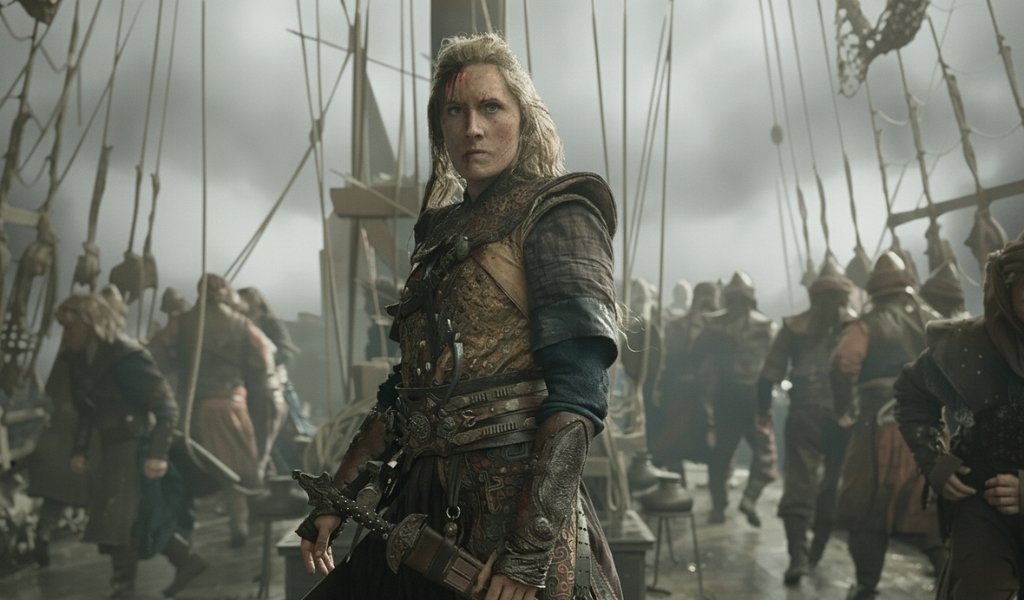
The show flips this entirely. In House of the Dragon, Sharako Lohar is portrayed as a woman, brought to life by the acclaimed actor Abigail Thorn.
Thorn’s performance is magnetic—commanding, sharp, and instantly memorable. The casting injected fresh energy into a character who could have easily faded into the background of a crowded ensemble.
Yet the show makes a second, even bolder choice: this version of Sharako Lohar dies in Episode 1 of the new season. A character who endures for chapters in the book is killed off almost immediately on screen.
It’s a divisive decision. On one hand, it robs us of more time with Thorn’s compelling portrayal. On the other, it raises the stakes and signals that the show isn’t afraid to rewrite its own mythology.
These changes reflect the broader challenge of adapting Fire & Blood a book written as a fragmented, in-universe history rather than a straightforward narrative. Showrunners have license to fill gaps and reshape figures, for better or worse.
The VFX surrounding these naval battles deserves special praise. The burning fleets, dragon-lit skies, and chaotic sea warfare rank among the most ambitious spectacle the series has attempted.
Frequently Asked Questions
What Happens to the Triarchy?
In the lore of Fire & Blood, the Triarchy’s story doesn’t end with the Dance of the Dragons. Its alliance is fragile by nature, held together by mutual interest rather than loyalty.
Eventually, the three cities turn on one another in a devastating conflict known as the Daughters’ War a brutal civil war fought across the Disputed Lands and the Stepstones. The “Three Daughters” tear each other apart.
This fracturing matters for the bigger picture. By the time of Game of Thrones, centuries later, Lys, Myr, and Tyrosh exist as independent, often-feuding city-states rather than a unified power. The Triarchy is long gone, a footnote of a much earlier age.
The conflict also reshaped the deaths and fortunes of major Westerosi players tied to the war, including the Velaryons and Lannisters whose ambitions collided over the Stepstones.
Are the Free Cities of Lys, Myr, and Tyrosh in Game of Thrones?
Yes—and they’re more relevant than you might remember. All three cities appear or are referenced throughout Game of Thrones, scattered across the Essosi map.
The region is closely tied to Daenerys Targaryen’s journey. Her path through Essos winds through cities shaped by the same Free Cities culture, complete with sellsword companies, slave markets, and shifting political loyalties.
Lys in particular is famous for its perfumes, pleasure houses, and pale-haired beauty a legacy of its old Valyrian blood. Characters like the assassin sent after a young Daenerys hail from this corner of the world.
So while the Triarchy itself is ancient history by the time Daenerys rises, the cities that formed it remain woven into the fabric of the later saga.
How the Triarchy Rewrote the Balance of Power
The Triarchy is far more than background noise in the war for the Iron Throne. This coalition of Lys, Myr, and Tyrosh turned the tide of the Dance of the Dragons by lending its fleets to the Greens.
Its naval power cracked Velaryon dominance of the seas and helped deliver some of the war’s most catastrophic battles. Without the Triarchy, the conflict’s entire balance shifts.
The show’s creative gambles Abigail Thorn’s striking turn as a gender-swapped Sharako Lohar, her early exit, and the spectacle-driven sea battles prove that House of the Dragon is willing to reshape the source material to serve its story.
Whether those changes thrill or frustrate you, one thing is clear: the triarchy in House of the Dragon has firmly cemented itself as a power that helped rewrite Westeros’s future. Keep watching the seas they’re where this war will be won.