
House of the Dragon Season 3 Episode 2 Review
There’s a particular kind of frustration that only book readers know. You sit down, the opening credits roll, and for a few glorious minutes, the show delivers exactly what you hoped for: stunning visuals, gut-wrenching performances, and the kind of dramatic weight that made Fire & Blood such a compelling read. Then the writers make a decision so baffling, so needlessly theatrical, that you forget everything that came before it.
House of the Dragon Season 3 Episode 2, titled “Queen’s Landing,” is that experience distilled into 58 minutes. It’s a technically impressive episode that shoots itself in the foot with lazy contrivances, gutted source material, and at least one scene that crosses a line for no discernible narrative reason.
Let’s break it all down.
A Pyrrhic Victory for Team Black
The Impact of Jace’s Tragic Fall in House of the Dragon Season 3 Episode 2
The episode opens in the aftermath of Jacaerys Velaryon’s death, a loss that casts a long, cold shadow over everything that follows.
Jace was more than Rhaenyra’s heir. He was her moral anchor, the proof that her cause was worth fighting for. His absence doesn’t just weaken Team Black strategically; it destabilizes the queen emotionally in ways the episode tries to explore, with mixed results.
The cinematography here is genuinely striking. Director Clare Kilner frames Rhaenyra’s grief in tight close-ups that leave nowhere to hide Emma D’Arcy carries every scene on sheer performance alone.
The Black Queen’s Grief & Dragonstone Realities
Rhaenyra’s Public Meltdown and the Loss of an Heir
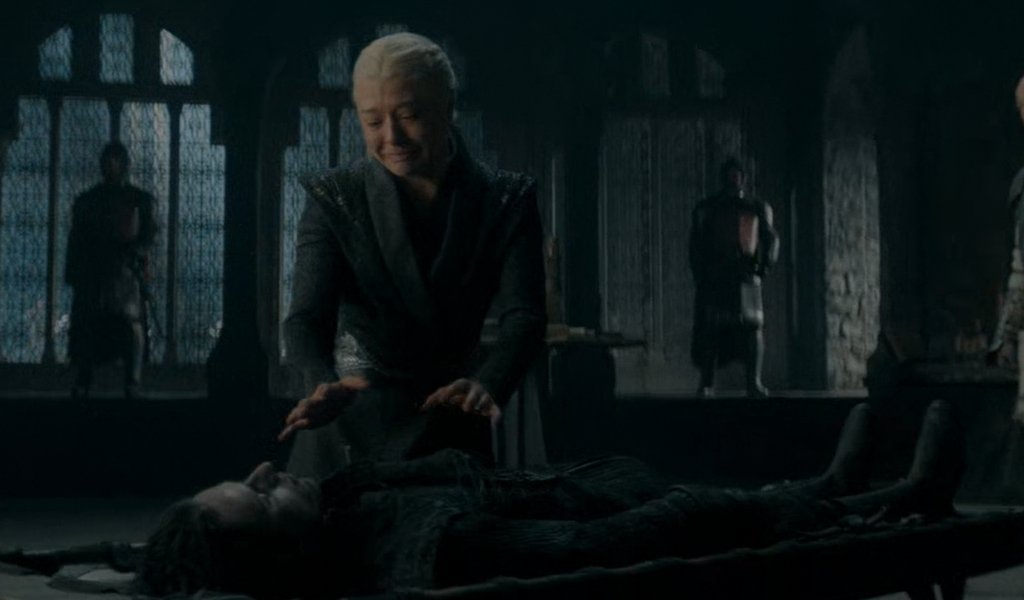
Rhaenyra’s breakdown at Dragonstone is raw and painful to watch, and D’Arcy earns every second of it.
But the script undercuts the moment with a puzzling choice: the queen completely loses composure in front of her court, her council, and her allies at the exact moment when projecting strength matters most. Grief is human. Collapsing publicly while a war hangs in the balance is something else entirely.
More frustratingly, the show introduces a logical gap involving Ser Lorent Marbrand that it never bothers to close. His loyalty, his positioning, and his role in the episode’s events are treated as background noise when they deserve real scrutiny. It’s the kind of sloppy connective tissue that Fire & Blood never left dangling.
Baela’s Capability and the Afterthought of the Dragonseeds
Baela Targaryen continues to be one of the most consistently well-written characters in the series, and the show knows it which makes her treatment here all the more baffling.
She’s capable, sharp, and fiercely loyal. Yet the episode reduces her to a supporting role in scenes that should belong to her. The Dragonseeds, meanwhile, are handled as an afterthought: mentioned, briefly addressed, then tucked away before any of their complexity can breathe. For a storyline that Fire & Blood treats as one of the Dance’s most fascinating threads, it deserves far better.
The Vale and Riverlands Disappointments: Major Deviations from Fire & Blood
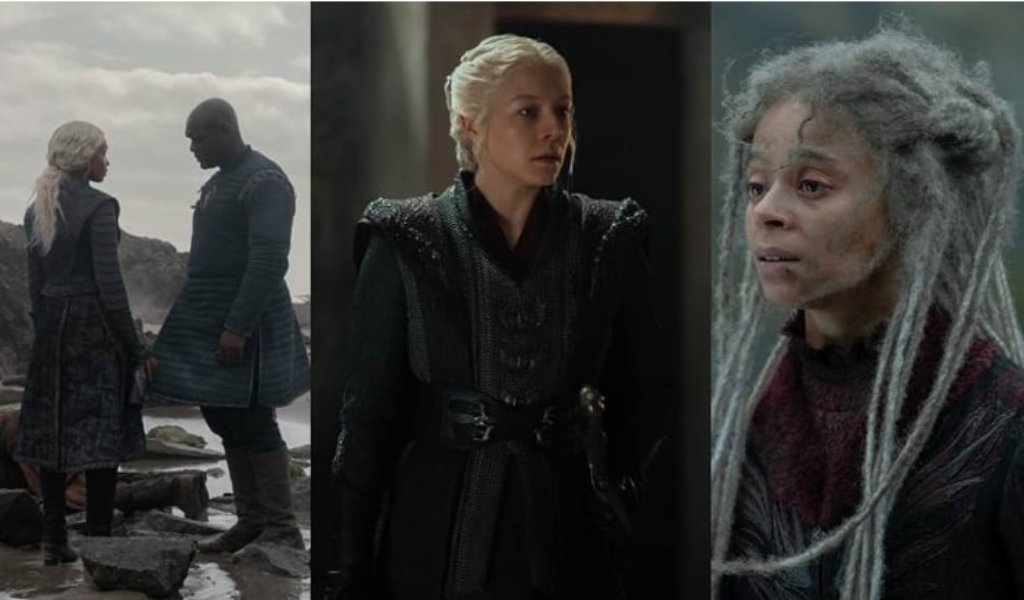
Rhaena Targaryen: Seeking Asylum in the Vale
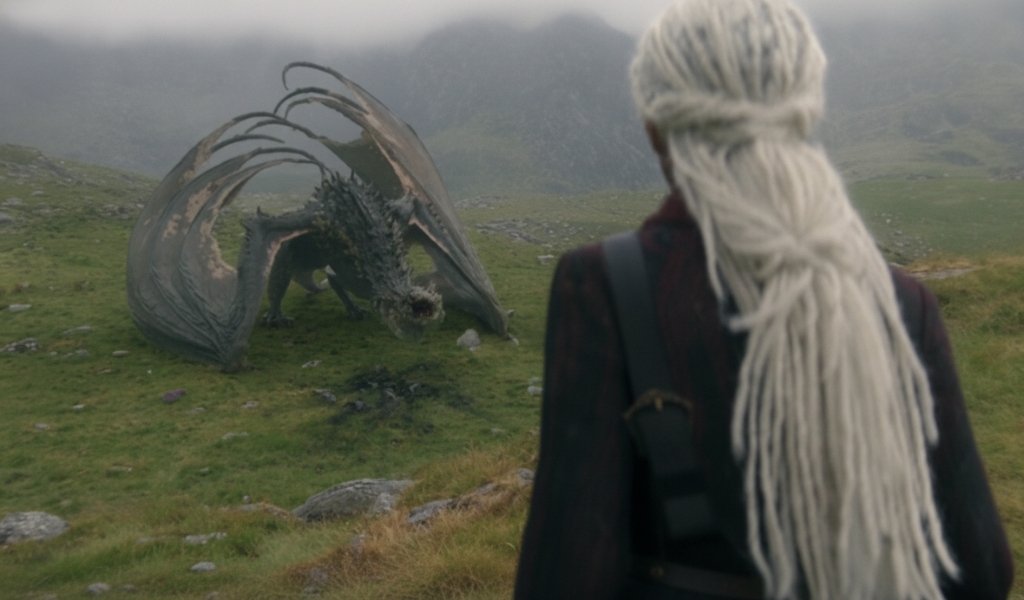
Rhaena’s arc in the Vale had so much potential. In the source material, her time there is a slow-burn of political maneuvering, personal growth, and the tantalizing mystery surrounding the dragon eggs.
The show fast-tracks her journey in ways that strip it of tension. The Vale feels like a pit stop rather than a destination, a setting visited rather than inhabited.
The Unforgivable Sin: Skipping the Epic “Fishfeed” (Battle by the Lakeshore)
This is where book readers will feel the sharpest sting.
The Battle by the Lakeshore colloquially known as the “Fishfeed” is one of the most visceral, operatically brutal land battles in Fire & Blood. It’s the kind of sequence that would have provided House of the Dragon with its most spectacular ground combat since the show began: a chaotic, bloody confrontation that carries real strategic consequences and introduces characters with staying power.
The show skips it entirely.
No buildup. No aftermath. Just a gap in the timeline where something genuinely extraordinary should have lived. The fan backlash is not just understandable, it’s warranted. Cutting the Fishfeed to streamline the plot is like cutting the Red Wedding to avoid slowing down Season 3 of Game of Thrones. Some battles earn their screen time.
Alys Rivers and Daemon’s Absurd Rift over Harrenhal
The Daemon-Alys dynamic at Harrenhal has been one of Season 3’s more intriguing threads until this episode turns it into a soap opera.
Their conflict here is manufactured. The tension between them doesn’t emerge organically from character or circumstance; it feels engineered by writers who needed dramatic friction and reached for the most convenient lever available. Matt Smith is still compelling, and there are flashes of the Daemon we know: mercurial, dangerous, hard to read but the Harrenhal material loses momentum precisely when it should be building toward something significant.
The Fall of King’s Landing & A Baffling Execution
Capturing the Capital: The Gold Cloaks’ Loyalty to Daemon
The sequence surrounding King’s Landing is, visually, the episode’s centerpiece and on a purely technical level, it’s extraordinary.
The Gold Cloaks’ shift in loyalty to Daemon is handled with appropriate menace. The streets of the capital feel genuinely precarious, and the episode captures the chaos of a city changing hands without a single dragon overhead. That restraint is smart filmmaking.
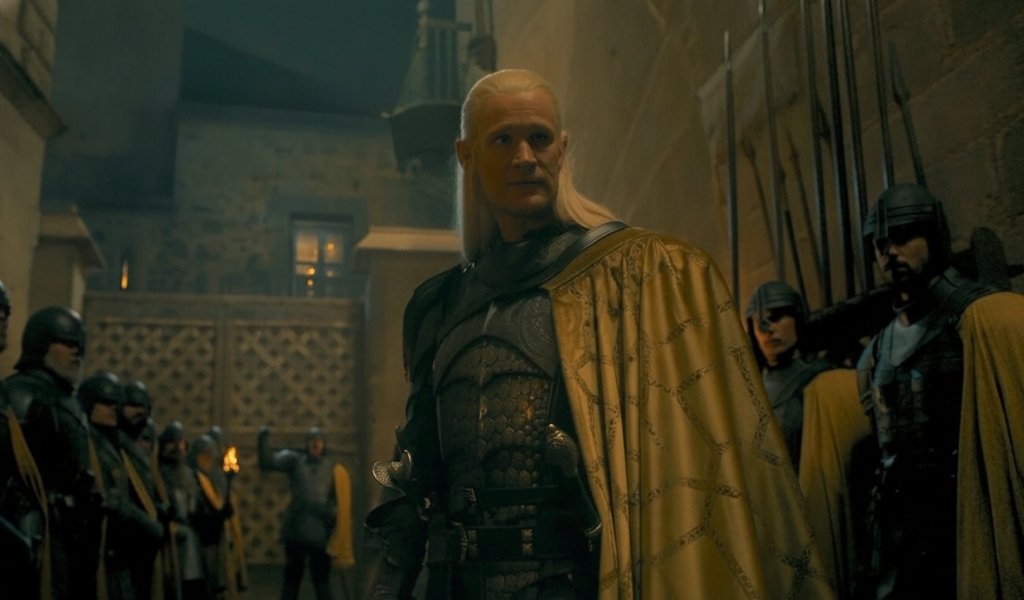
The fall of King’s Landing carries weight. It should. This is a seismic moment in the Dance of the Dragons, and the show to its credit doesn’t treat it casually.
The Controversial Assault of Alicent Hightower
Then comes the scene involving Alicent Hightower and Jasper Wylde and this is where the episode loses the plot entirely, in both senses of the phrase.
The assault scene is framed as a narrative catalyst, a contrivance designed to force a reaction from Rhaenyra later. But it’s lazy, ugly storytelling dressed up as dramatic consequence. House of the Dragon has always walked a difficult line with its treatment of violence against women, sometimes purposeful, sometimes gratuitous. This falls on the wrong side.
What makes it worse is how unnecessary it is. The show had other tools at its disposal. The writers chose this one anyway. That’s a creative decision worth criticizing loudly and specifically.
Forcing Rhaenyra’s Hand: The Shocking Beheading of Otto Hightower
Let’s talk about Otto Hightower.
Rhys Ifans has been one of the best things about this show since the pilot. Otto is calculating, ruthless, and brilliantly self-aware a political animal who understands exactly what he’s doing and why. His imprisonment sets up one of the episode’s most pivotal moments.
Rhaenyra executing Otto herself, with Dark Sister, is the episode’s biggest swing—and it doesn’t land cleanly.
The staging is dramatic. The imagery is arresting. But the choice to force Rhaenyra into personally wielding the blade frames her not as a queen hardened by war, but as a woman reacting emotionally to events being done to her. In Fire & Blood, Rhaenyra’s authority is established through deliberate, politically calculated acts. Here, the execution reads as desperate rather than decisive.
That’s not empowerment. That’s a writing team mistaking shock for strength.
It also removes Otto from a story that still had room for him and robs Alicent of her most important surviving political ally at a moment when her arc needs complexity, not further reduction.
Frequently Asked Questions
What happens in House of the Dragon Season 3 Episode 2?
“Queen’s Landing” follows the immediate fallout of Jacaerys Velaryon’s death, Rhaenyra’s emotional breakdown at Dragonstone, and the fall of King’s Landing to Daemon’s forces. The episode culminates in the shocking imprisonment of Otto Hightower and Rhaenyra’s execution of him using Dark Sister. It also features a controversial and widely criticized assault scene involving Alicent Hightower and Jasper Wylde.
Why did the show skip the Battle by the Lakeshore (Fishfeed)?
No official explanation has been provided by the showrunners. The Battle by the Lakeshore known as the Fishfeed in fan circles—is one of the most significant land battles in Fire & Blood, featuring brutal, large-scale combat with major strategic consequences. Its omission has generated considerable backlash from book readers who viewed it as one of the Dance’s most cinematic untold stories. The most likely reason is pacing and budget, though neither justifies the cut narratively.
Does Rhaenyra behead Otto Hightower herself in the book?
No. In George R.R. Martin’s Fire & Blood, Otto Hightower’s fate plays out differently, and Rhaenyra is not depicted personally executing him with Dark Sister. The show’s decision to stage this moment as a direct, personal act by the queen is an original invention—one that many readers argue undermines Rhaenyra’s political authority by making her appear emotionally reactive rather than strategically ruthless.