

Full Explanation of Aegon the Conqueror’s Dream & How It Retcons Game of Thrones
Few revelations in the Game of Thrones universe have rewired the lore quite like Aegon the Conqueror’s dream. Introduced at the close of House of the Dragon season 1, episode 1, this single prophecy transformed the founder of the Targaryen dynasty from a power-hungry conqueror into a reluctant prophet and, in the process, quietly rewrote how we understand the entire saga’s endgame.
The prequel’s timeline sits roughly 172 years before the death of the Mad King and the birth of Daenerys Targaryen. On paper, that distance should insulate Game of Thrones from anything happening in House of the Dragon. In practice, the opposite is true. Aegon’s dream, which he named “A Song of Ice and Fire,” reaches forward across three centuries to reframe the defeat of the White Walkers and the meaning of the Prince That Was Promised prophecy.
Each season of House of the Dragon has added new layers to this lore drop from Rhaenyra Targaryen passing it to her heirs, to Daemon Targaryen finally accepting it, to the prophecy becoming public knowledge in King’s Landing. Below, we break down what the dream really means, whether it exists in George R.R. Martin’s books, and how it changes the way we read both the Dance of the Dragons and Game of Thrones season 8.
What Does Aegon the Conqueror’s Dream Really Mean?
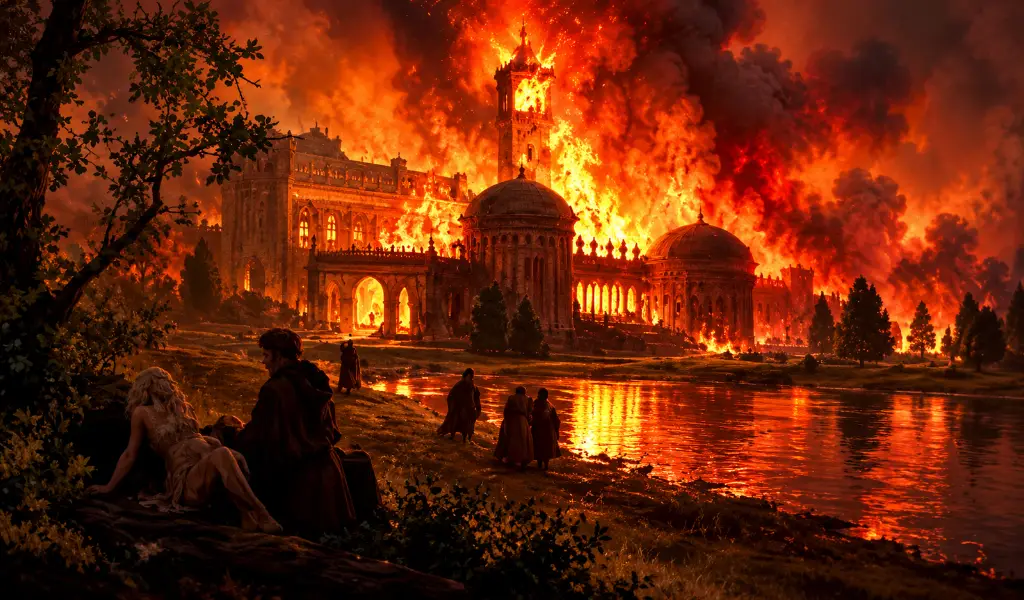
House of the Dragon season 1, episode 1 ended with King Viserys I Targaryen naming his daughter Rhaenyra as heir to the Iron Throne. But the decision came with a heavier burden: the secret knowledge every Targaryen king has carried. Viserys recounts it in full:
“Aegon foresaw the end of the world of men. It’s to begin with a terrible winter, gusting out of the distant North. Aegon saw absolute darkness riding on those winds, and whatever dwells within will destroy the world of the living. When this great winter comes, Rhaenyra, all of Westeros must stand against it. And if the world of men is to survive, a Targaryen must be seated on the Iron Throne. A King or Queen, strong enough to unite the realm against the cold and the dark. Aegon called his dream ‘The Song of Ice and Fire.'”
For anyone who watched Game of Thrones, this vision is instantly recognizable. The terrible winter, the encroaching darkness, and the existential threat to all living things are a fair summary of the Night King and his Army of the Dead even though that reckoning wouldn’t arrive until roughly 300 years after Aegon conquered Westeros.
The prophecy also gives the phrase “A Song of Ice and Fire” a far more literal meaning:
- Ice = the White Walkers and the coming Long Night
- Fire = the Targaryens and their dragons
Read this way, Aegon’s Conquest stops being a story of pure ambition. It becomes a mission with a noble endgame: to seat a strong enough ruler on the Iron Throne to unite Westeros against the cold and the dark.

Is Aegon’s Prophecy in George R.R. Martin’s Books?
Here’s where the “Aegon’s dream, a song of ice and fire” connection gets interesting. Aegon Targaryen’s dream is never mentioned in GMartin co-created House of the Dragon and gave his approval for the reveal, even though he’s no longer involved with the seriesame of Thrones, and his specific prophecy doesn’t appear in the book series that shares its name. This is brand-new material created for House of the Dragon.
That said, it doesn’t come out of nowhere. The dream rhymes with existing prophecies about the White Walkers and how they’ll be defeated:
- Azor Ahai, the legendary hero said to wield the burning sword, Lightbringer.
- The Prince That Was Promised, often used interchangeably with Azor Ahai, and described as having “a song of ice and fire.”
Both prophecies draw on the same Robert Frost-inspired idea of ice-and-fire duality at the world’s end the exact thematic well Aegon’s dream taps into.
It’s obviously too late for the dream to appear in Game of Thrones, but it could still make its way into Martin’s novels. The author has two books left to finish: The Winds of Winter, whose release date remains long-awaited and repeatedly delayed, and the hopeful follow-up A Dream of Spring. Martin has established the Others (the books’ name for the White Walkers) as the overarching threat in much the same way, and he devotes far more attention to prophecy than the show ever did.
Crucially, Martin co-created House of the Dragon and gave his approval for the reveal, even though he’s no longer involved with the series.

That endorsement strengthens the case that Aegon’s dream will eventually become book canon.
Did Game of Thrones’ Targaryens Know About the Prophecy?
The short answer: no, not really and that actually makes sense. The Targaryen dynasty collapsed before Daenerys was even born. Viserys was only a small child at the time, and very few people knew that Jon Snow was secretly a Targaryen at all.
But a couple of figures may have brushed up against the truth.
Maester Aemon Targaryen is a strong candidate. As the son of a king and one many favored for the Iron Throne he moved in circles where such secrets traveled. His brother Daeron was known for dragon dreams, and in the books, Aemon is explicitly aware of the Prince That Was Promised prophecy. It’s entirely possible the two prophecies became related or conflated over the generations.
Rhaegar Targaryen is the more compelling case. He was obsessed with the Prince That Was Promised, first believing it might be him and later his son. As heir to the Mad King Aerys II, he may have been told of the family secret though whether Aerys ever passed it down is far from certain. What we do know comes from Daenerys’ House of the Undying visions in Game of Thrones season 2, where Rhaegar says:
“Aegon. What better name for a king… He is the prince that was promised, and his is the song of ice and fire.”
That line strongly suggests Rhaegar knew of, or had at least absorbed fragments of, the Song of Ice and Fire dream. It may even explain why he was so fixated on the name Aegon and, in turn, why Jon Snow’s true Targaryen name is Aegon as well.
Is Aegon’s Dream the Same as the Prince That Was Promised?
The overlap between Aegon’s Song of Ice and Fire and the Prince That Was Promised prophecy isn’t a coincidence. House of the Dragon season 1, episode 4 links them directly through the catspaw dagger, the Valyrian steel blade whose inscription reads:

“From my blood… come the Prince That Was Promised… and his will be the Song of Ice and Fire.”
That wording is nearly identical to Rhaegar’s line to Daenerys, hinting that he may have read the inscription himself; the dagger could plausibly have belonged to him before the dynasty fell. In effect, the Prince That Was Promised, Azor Ahai, and Aegon’s dream all point toward the same goal: defeating the White Walkers.
House of the Dragon goes a step further, suggesting the Prince That Was Promised isn’t a separate prophecy at all, but a component of Aegon’s dream. The Targaryen who holds the Iron Throne when the darkness comes is meant to be that savior. And because “prince” is gender-neutral in High Valyrian, the chosen one could just as easily be a woman, a Rhaenyra, or a Daenerys.
There’s one wrinkle. Melisandre notes in A Storm of Swords that the savior was prophesied thousands of years ago, so Aegon’s dream can’t be fully collapsed into the Prince That Was Promised. A cleaner reading is that Aegon knew of the ancient prophecy, then had his own vision and became convinced the promised savior would be a Targaryen.
How Aegon the Conqueror’s Dream Changed the Dance of the Dragons
The dream isn’t just a piece of forward-looking lore, it’s the engine driving House of the Dragon‘s central tragedy. Its ripple effects reshaped the relationship between Rhaenyra Targaryen and Alicent Hightower, and the fate of the entire family.
In season 1, episode 8, a dying and delirious Viserys tried to share the story of Aegon’s dream with Alicent, not realizing who he was actually speaking to. Alicent, who had no knowledge of the prophecy, interpreted his final words as naming their son, Aegon, as heir instead of Rhaenyra. That misunderstanding pushed her to champion Aegon’s claim and see him crowned king. The civil war might have erupted regardless but Aegon’s dream lit the fuse.
By season 2, Alicent had realized her mistake about the Song of Ice and Fire. By then it was too late. Blood had been spilled on both sides, banners had been called, and the realm was already splitting apart, though she would later approach Rhaenyra and agree to open King’s Landing to her. The result is one of the story’s cruelest ironies: the Conqueror’s noble prophecy turned the Dance of the Dragons into a war built on a tragic misreading.

How the Prophecy Reshaped Rhaenyra and Daemon
The House of the Dragon season 3 finale piles even more weight onto Aegon’s dream, pushing hard on the idea that Rhaenyra herself might be the Prince That Was Promised. Since midway through season 2, she has developed a growing God complex and a belief in her own divinity, both fueled by the prophecy. That conviction has become her justification for her darkest acts:
- The killing of the High Septon
- The torment of Helaena Targaryen, driven to the point of suicide
- The ruinous actions at Tumbleton
In season 3, episode 8, “The Treasons at Tumbleton,” Rhaenyra addresses the smallfolk of King’s Landing directly. She warns them of the coming darkness, insists that only a Targaryen, never a Hightower, can protect the realm, and declares herself Rhaenyra the Chosen. Then, in High Valyrian, she states with total conviction that she is the Prince That Was Promised.
Daemon Targaryen has been transformed too. After experiencing visions of the White Walkers and Daenerys Targaryen in the season 2 finale, the man who once dismissed Viserys’ beliefs as nonsense now fully buys in. He’s convinced that winter is coming and that Rhaenyra’s rule is essential to surviving it or, at the very least, he’s willing to embrace the prophecy as a means of pushing her to do whatever it takes to secure their reign.
This is where the true purpose of Aegon’s dream comes into focus. It’s no longer just a device to connect the prequel to Game of Thrones, nor merely the spark for the civil war. It has become a study of how belief in prophecy and destiny corrupts a person and the danger of surrendering to that belief. That’s precisely how Martin tends to wield prophecy in A Song of Ice and Fire.
How It Retcons Game of Thrones and the White Walkers’ Defeat
Because Aegon’s dream was never mentioned in the original series, its introduction functions as a retcon one that changes how the events leading to Game of Thrones‘ ending read in hindsight. The obvious question: if Daenerys and Jon had known about the Song of Ice and Fire, would they have acted differently? Quite possibly.
Prophecies in Game of Thrones have always been self-fulfilling, nudging characters toward choices they might not otherwise make. Daenerys wanted the Iron Throne regardless, but she paused her campaign to help fight the dead. Knowing Aegon’s dream, it’s not hard to imagine those priorities flipping her pursuit of the throne recontextualized as the very thing the prophecy demanded.
The bigger problem is one of scale. House of the Dragon establishes the White Walkers as the ultimate threat, a danger the Targaryens carried in secret across nearly three centuries of rule. Yet Game of Thrones season 8 resolved that threat and killed the Night King in just three episodes, with only one major battle between the living and the dead.

It felt rushed at the time. With this new lore layered on top, it feels worse. If the entire Targaryen mission was to prepare Westeros for this apocalyptic winter, then dispatching the Night King so quickly undercuts three centuries of buildup. To be fair, that’s not the prequel’s fault. Aegon’s dream makes perfect sense for House of the Dragon and the wider world of ice and fire; it’s simply undermined by the shortcomings of the show it’s reaching back to reframe.
What Aegon’s Dream Means for the Future of the Franchise
Aegon the Conqueror’s dream has grown from a single closing-scene twist into the spine of House of the Dragon. It reframes the Conquest as a sacred duty, ties the Prince That Was Promised prophecy into a unified mythology, and turns the Dance of the Dragons into a tragedy born from a misheard message. Above all, it dramatizes the corrosive power of prophecy the way certainty about destiny can justify unforgivable acts.
For fans, the payoff will ultimately depend on two things: whether Martin folds the dream into The Winds of Winter and A Dream of Spring, and whether future Game of Thrones projects can do justice to the White Walker threat that House of the Dragon has now elevated. If you’re rewatching the saga, it’s worth revisiting Game of Thrones season 2’s House of the Undying sequence and season 8’s Battle of Winterfell with Aegon’s dream in mind. Both play very differently once you know what the founder of House Targaryen saw all those centuries ago.
Frequently Asked Questions
What is Aegon the Conqueror’s dream?
It’s a vision Aegon Targaryen had of a terrible winter and absolute darkness rising from the North to destroy the world of the living. He named the dream “A Song of Ice and Fire” and believed a Targaryen ruler was needed on the Iron Throne to unite Westeros against the coming threat of the White Walkers.
Does Aegon’s dream appear in George R.R. Martin’s books?
No. The prophecy is original to House of the Dragon and does not appear in the current A Song of Ice and Fire novels. However, Martin co-created the show and approved the reveal, so it may eventually become book canon in The Winds of Winter or A Dream of Spring.
How is Aegon’s dream connected to the Prince That Was Promised?
The catspaw dagger’s inscription reads, “From my blood… come the Prince That Was Promised… and his will be the Song of Ice and Fire.” House of the Dragon suggests the Prince That Was Promised is part of Aegon’s dream, the Targaryen ruler destined to defeat the darkness.
How does Aegon’s dream retcon Game of Thrones?
It reframes the White Walker threat as the true purpose behind Targaryen rule across nearly 300 years. That makes the rushed, three-episode defeat of the Night King in Game of Thrones season 8 feel even more abrupt in hindsight.
Frequently Asked Questions
What was Aegon the Conqueror’s dream?
Aegon the Conqueror’s dream which he called The Song of Ice and Fire was a prophetic vision of a terrible, freezing winter riding out of the far North. He foresaw a dark force that would destroy all living men, and he believed that a unified Westeros led by a Targaryen on the Iron Throne was vital to save humanity.
Is HBO making a show about Aegon the Conqueror?
Not a TV show. Warner Bros. has officially confirmed a theatrical feature film titled Game of Thrones: Aegon’s Conquest, written by Beau Willimon, centered on Aegon I Targaryen’s conquest of Westeros. It’s slated for release in 2027 or later.
Is Aegon the Conqueror good or bad?
Aegon the Conqueror is neither purely good nor purely bad; he is a complex historical figure. He used extreme violence and terror to conquer Westeros, but he also showed political wisdom and pragmatism to build a lasting, unified peace.
Is Jon Snow Aegon the Conqueror?
No, Jon Snow is not Aegon the Conqueror. Aegon the Conqueror (Aegon I) was the legendary first Targaryen king who united Westeros centuries before the events of Game of Thrones. (However, in the television series, it is revealed that Jon Snow’s true birth name is actually Aegon Targaryen, making him a descendant of Aegon the Conqueror, but he is a completely different person born many generations later).
Is the Aegon the Conqueror movie confirmed?
Yes, a Game of Thrones feature film titled Game of Thrones: Aegon’s Conquest has been officially confirmed by Warner Bros. as part of its theatrical slate for 2027 and beyond.