
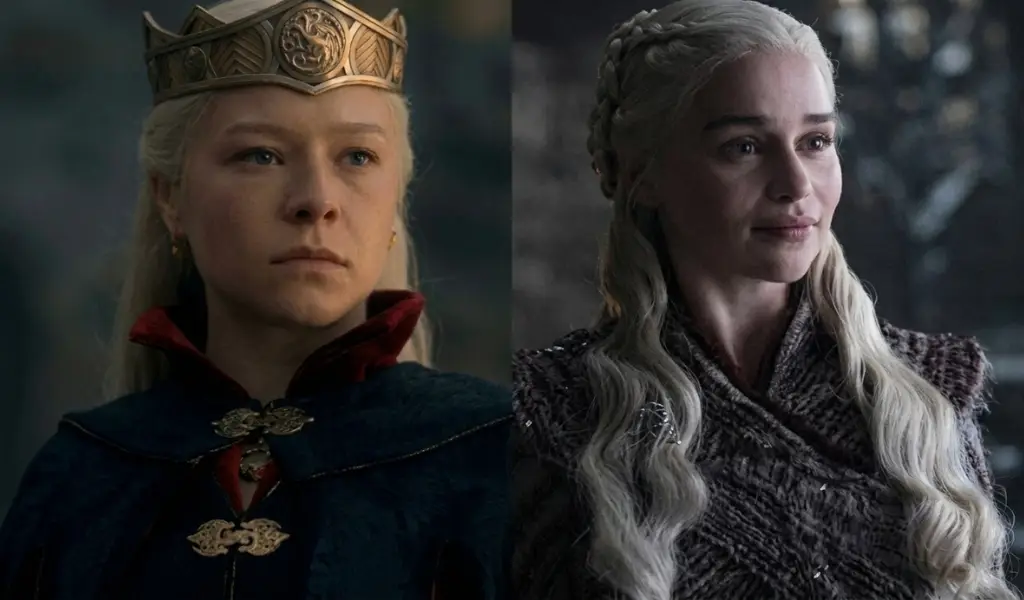

The Parallels Between Rhaenyra and Daenerys Targaryen: House of the Dragon fixes Daenerys ending
Daenerys Targaryen’s fall from liberator to conqueror remains one of the most divisive turns in television history. Fans spent years watching her free slaves and topple tyrants, only to see her torch King’s Landing in a matter of episodes. It felt abrupt. It felt unearned. And for a long time, it seemed like that ending would just have to stand, unresolved and unsatisfying, forever.
Then came House of the Dragon.
Set roughly 200 years before Daenerys ever set foot in Westeros, this prequel series had no obligation to address her story at all. Yet through its own protagonist, Rhaenyra Targaryen, House of the Dragon has quietly become the redemption arc Game of Thrones season 8 never got. Rhaenyra isn’t Daenerys. She never claims to be. But her descent into paranoia and cruelty across House of the Dragon season 3 mirrors Daenerys’ unraveling so closely that it’s impossible to watch one without thinking of the other. In doing so, the spinoff has managed something remarkable: it’s made Daenerys’ rushed, controversial ending easier to understand, and easier to forgive.
The Parallels Between Rhaenyra and Daenerys Targaryen
Rhaenyra Targaryen is Daenerys’ six-times great-grandmother, and while centuries and countless plot differences separate the two women, their core arcs run remarkably parallel. Both are Targaryen queens who start out wanting, genuinely, to rule well. Neither craves power for its own sake. Both believe they can be the exception, the one who breaks the pattern of cruelty that so often defines the Iron Throne.
That belief doesn’t survive contact with the crown.
In both cases, the sheer pressure of ruling, of holding onto power while everyone around them jockeys to take it, wears these women down until they’re barely recognizable. Loss piles onto loss. Fear curdles into rage. Rage gives way to delusion. By the time each queen reaches her breaking point, the transformation into tyranny feels less like a character flaw and more like an inevitability baked into the position itself.
This is precisely what made Daenerys’ turn toward madness so contentious. Her decision to burn King’s Landing, and the innocent people in it, just to finish off an already-defeated Cersei, felt like a betrayal of everything her character had built over seven seasons. It wasn’t that the destination made no sense. It’s that the road there was far too short. Rhaenyra’s version of that same road, on the other hand, gets the space it always deserved.
Why House of the Dragon Season 3 Handled the Descent Better
House of the Dragon season 3 covers a lot of ground. It opens with Rhaenyra practically giddy over the prospect of victory, a rare moment of lightness that doesn’t last. Jace’s tragic death cuts that optimism short almost immediately, and from there, the season methodically chips away at her composure. She takes King’s Landing. She tries, at least initially, to rule the way her father would have wanted. But by the season 3 finale, something in her has shifted for good. She’s paranoid. Disconnected. Cruel in ways that would have been unthinkable for her earlier self.
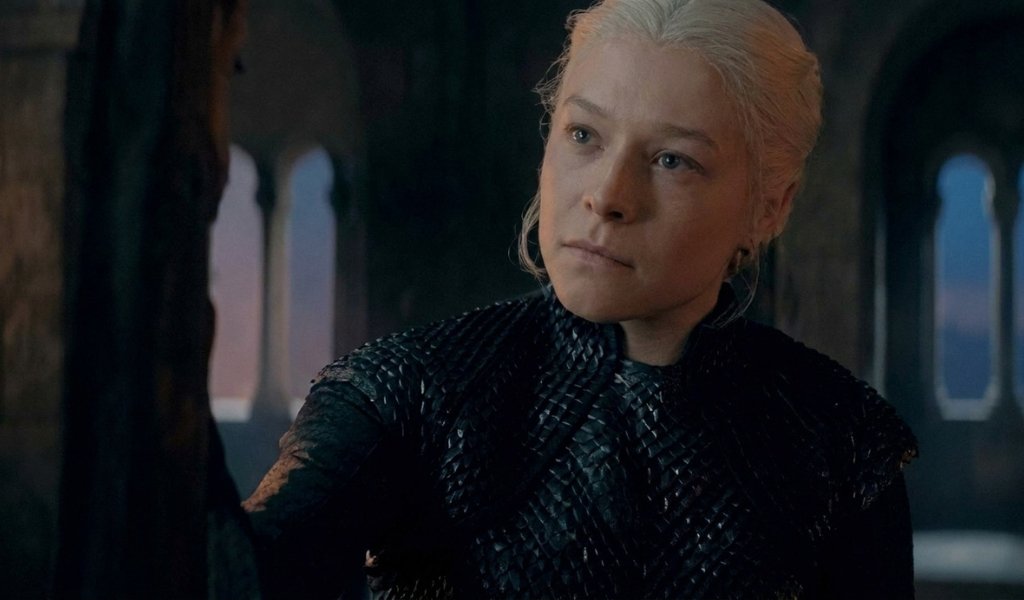
It’s a massive change, but crucially, it doesn’t feel like a cheat. House of the Dragon earns Rhaenyra’s madness scene by scene, giving viewers the emotional throughline necessary to buy into her transformation.
Compare that to Daenerys, who also became the Mad Queen over the course of a single season. The difference is that Game of Thrones season 8 forced her transformation to compete for airtime with the Night King, the Battle of Winterfell, and a dozen other major plot threads. Her grief-driven spiral toward paranoia made narrative sense on paper. It just needed room to breathe that the show never gave it.
There’s a strong case that Game of Thrones would have landed better if season 8 had focused entirely on the Night King and Daenerys’ gradual slide into paranoia, saving her violent conquest of King’s Landing (and Jon Snow’s fractured response to it) for a full season 9. That’s essentially the blueprint House of the Dragon is now following. Season 3 pushed Rhaenyra to her breaking point. Season 4 has room to explore what comes next: how she continues to change, how the people around her respond, and whether she ever recognizes just how far she’s fallen. It’s a more patient, more deliberate approach, and it shows.
How Rhaenyra’s Story Retroactively Improves Game of Thrones
Daenerys will never get a redo. That ship has sailed, and no amount of fan campaigning is going to change what already aired. But House of the Dragon has found a clever workaround: it can’t rewrite Daenerys’ story, but it can recontextualize it.
The parallels between Rhaenyra and Daenerys’ character arcs run deep enough that viewers naturally map one onto the other. That’s not an accident. When Rhaenyra took King’s Landing, the show deliberately echoed the camera angles used during Daenerys’ siege in Game of Thrones. Both women are mourning mothers pushed to extremes. Yet the contrast matters just as much as the similarity: when Rhaenyra executes her enemy, she does it with tears in her eyes, driven by duty rather than the kind of hollow vengeance that defined Daenerys’ final act. And still, despite that difference, Rhaenyra ends up in the same place Daenerys did. That’s the point. The crown corrupts. It doesn’t matter who’s sitting on it.
House of the Dragon adds another layer to that theme, one that makes the franchise’s central warning about power feel more complete than Game of Thrones managed on its own. Daenerys’ ending will always feel rushed. But thanks to Rhaenyra, it doesn’t feel quite as senseless anymore. House of the Dragon isn’t rewriting the past. It’s giving it the context it always needed.
A Prequel That Finally Delivers Closure
House of the Dragon didn’t set out to fix Game of Thrones. Its job was to tell Rhaenyra’s story on its own terms. But in doing that well, in taking the time to earn every step of her descent into madness, it’s accomplished something the original series couldn’t: making Daenerys’ ending feel less like a mistake and more like a warning the franchise had been building toward all along.
Season 4 still has plenty of ground to cover. If it continues on this same trajectory, giving Rhaenyra’s unraveling the same care and patience season 3 did, House of the Dragon might end up doing more than justice for its own protagonist. It might finally put the Mad Queen debate to rest.