
A Knight of the Seven Kingdoms Episode 4 Explained: The Meaning of ‘Seven’
Episode 4, titled “Seven,” marks a turning point in A Knight of the Seven Kingdoms. While this article works as an Episode 4 recap and review in spirit, it goes beyond a traditional summary. Rather than relying on spectacle or action, the episode quietly reshapes the story around one ancient Westeros tradition—the Trial of Seven—and uses it to ask a much bigger question: what does it truly mean to be a knight?
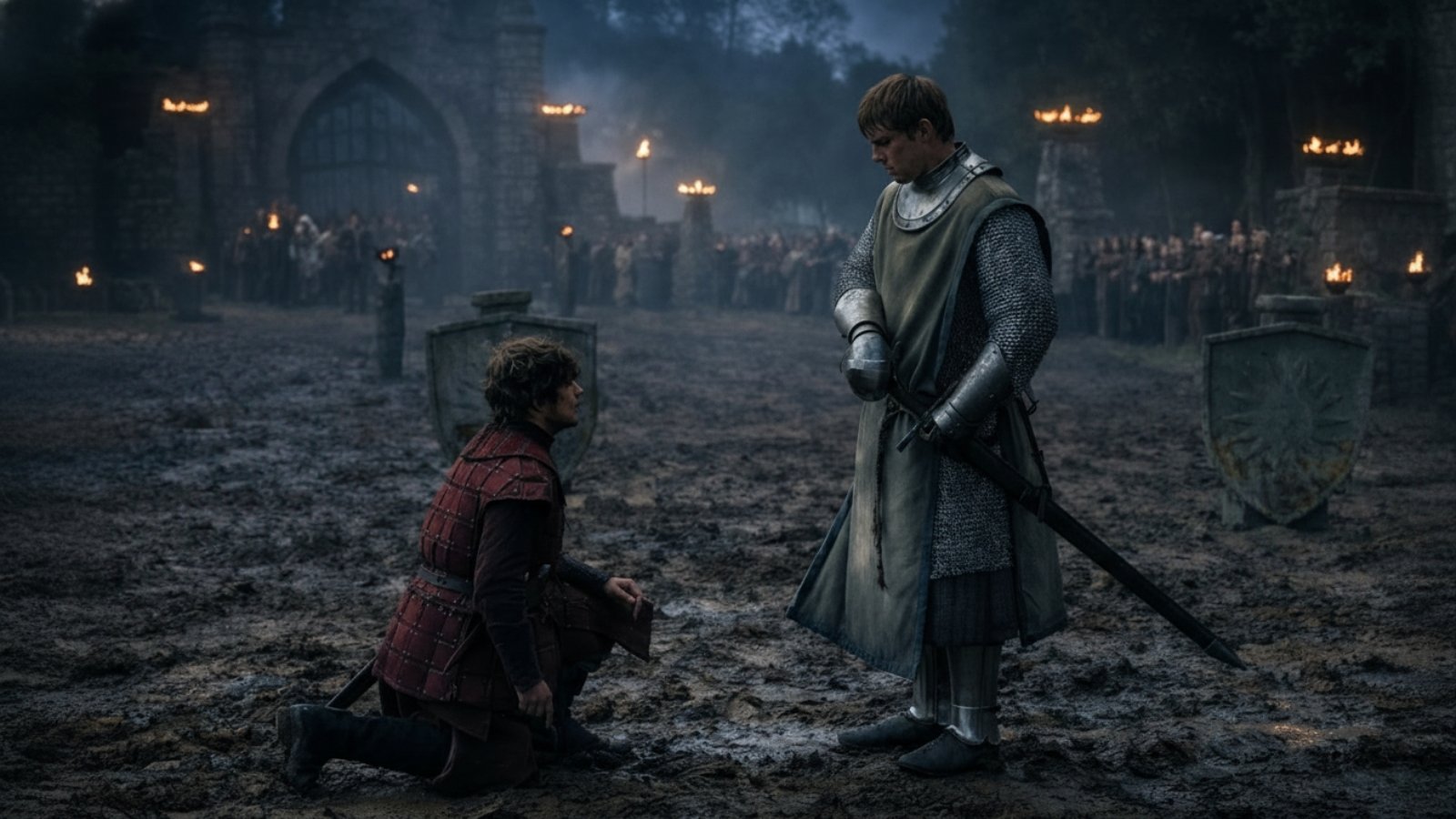
By the end of the episode, Dunk is no longer just a hedge knight caught in the wrong place at the wrong time. He becomes the centre of a moral test that exposes the values, fears, and ambitions of everyone around him.
This Episode 4 “Seven” explained guide focuses on meaning, lore, and consequences rather than surface-level recap.
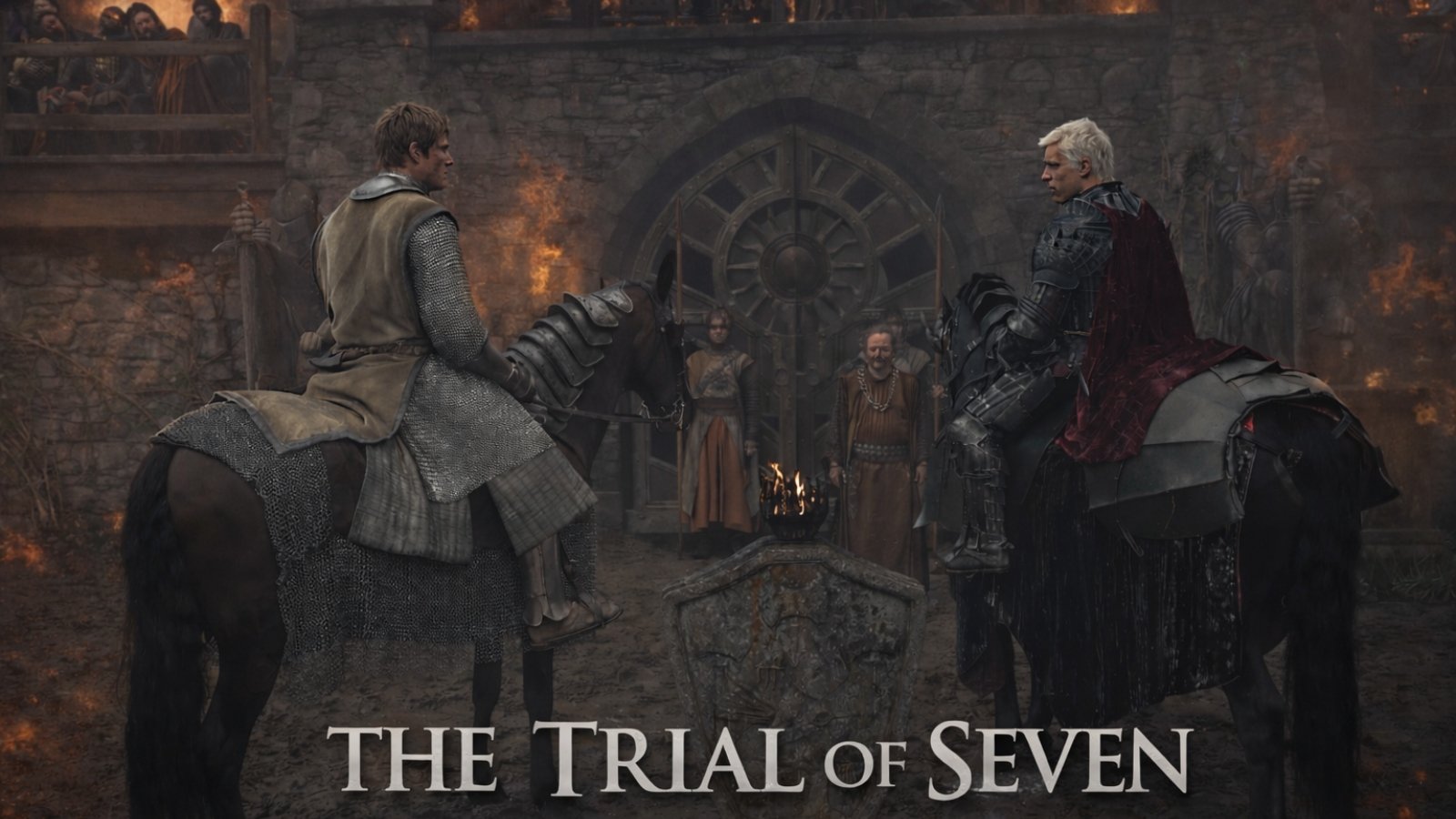
In A Knight of the Seven Kingdoms Episode 4, the Trial of Seven becomes the moral backbone of the story.
Dunk and Aerion Targaryen face judgment as the Trial of Seven looms in Episode 4.
Key Takeaways
- The Trial of Seven is a rare and symbolic form of justice in Westeros, as detailed in A Song of Ice and Fire lore on A Wiki of Ice and Fire.
- Aerion Targaryen uses tradition as a political weapon rather than justice
- Dunk’s Trial of Seven highlights the true meaning of knighthood
- Betrayal and loyalty reveal how corrupted knighthood has become
- Baelor Targaryen’s role in Episode 4 restores honour to a broken system
- Episode 4 sets the moral foundation for the conflict in Episode 5
What Is the Trial of Seven and Why Does It Matter in A Knight of the Seven Kingdoms Episode 4?
The main search intent behind A Knight of the Seven Kingdoms Episode 4 is understanding the Trial of Seven—what it is, why it is used, and why it matters. This is not just an episode recap or review; it is an explanation of how an ancient trial reshapes the story and raises questions about justice, honour, and power.
What Is the Trial of Seven in the ASOIAF Universe?
The Trial of Seven is one of the oldest and rarest forms of trial by combat in Westeros. For viewers asking what is a Trial of Seven in the Game of Thrones universe, the answer lies in its scale: instead of one champion per side, seven knights fight for the accused and seven for the accuser, with victory determining guilt or innocence.
This tradition is almost never invoked—not because it is illegal in Westeros, but because it is dangerous, unpredictable, and deeply symbolic. It turns justice into a public reckoning that tests loyalty, belief, and honour.
In Episode 4, the Trial of Seven is revived not out of respect for justice, but as a calculated political move.
Why Did Aerion Choose the Trial of Seven?
At first glance, allowing any form of trial by combat seems risky for Prince Aerion Brightflame. But the Aerion Targaryen Trial of Seven gives him three clear advantages.
Power Through Numbers
Aerion knows Dunk is alone. By demanding seven champions, he increases the odds that Dunk’s Trial of Seven will fail before the fighting even begins.
Political Theater
This trial places the outcome in full public view. If Dunk loses, Aerion’s authority is reinforced without appearing openly cruel, turning justice into spectacle.
Avoiding Personal Risk
A single combat would force Aerion to face Dunk directly—or admit cowardice. By choosing the Trial of Seven, Aerion hides behind tradition.
In short, Aerion weaponizes history. The Trial of Seven explained here is less about justice and more about control.
Dunk and the Meaning of a “True Knight”
Episode 4 repeatedly returns to knightly vows and the deeper question of what makes a true knight in ASOIAF. Dunk is poor, inexperienced, and politically insignificant—but he believes, without hesitation, that a knight’s duty is to protect the innocent.
This belief puts him at odds with nearly everyone who holds real power.
The irony is clear:
- The nobles debate legality
- The princes debate image
- Dunk debates right and wrong
When Dunk demands a trial, he isn’t chasing survival alone. He is defending the meaning of a knight’s oath. Dunk’s knight oath meaning becomes the moral centre of Episode 4.
Betrayal, Loyalty, and the House Fossoway Divide
One of the episode’s most important moments comes not from princes, but from the conflict within House Fossoway.
Steffon Fossoway’s betrayal shows how easily knighthood can be bought with promises of land and title. His choice contrasts sharply with Raymun Fossoway, who values honour over advancement.
This divide reflects a larger truth about Westeros:
- Knighthood has become a currency
- Honor has become a liability
The Trial of Seven forces every knight to reveal where they truly stand.
Why Baelor Targaryen Joining the Trial Changes Everything
The defining moment of A Knight of the Seven Kingdoms Episode 4 comes when Baelor Targaryen chooses to fight for Dunk. This moment defines A Knight of the Seven Kingdoms Episode 4 as a story about honour over power.
For those asking why did Baelor fight for Dunk, the answer lies in principle. Baelor challenges Aerion’s authority, re-frames the trial as a moral stand, and proves that honour still exists—even within House Targaryen.
The Trial of Seven once again becomes a test of character, not status.
The Symbolism of “Seven”
The Trial of Seven significance goes beyond combat. The number seven carries deep meaning in Westeros:
- Seven gods of the Faith
- Seven vows of knighthood
- Seven champions in judgement
By centring Episode 4 on this number, the story links faith, law, and morality into a single reckoning. The famous question—“Are there no true knights?”—echoes through every choice made in this episode.
What Episode 4 Sets Up for Episode 5
Episode 4 is deliberately restrained. It functions as a bridge rather than a climax, setting up the future consequences of the Trial of Seven.
It strips knighthood down to its core, exposes the cost of standing for what is right, and turns the trial into a judgement on Westeros itself. When the fighting begins, the outcome will matter less than who chose to stand.
Final Thoughts
A Knight of the Seven Kingdoms Episode 4 doesn’t rely on shock or spectacle. Instead, it uses tradition, symbolism, and choice to redefine its central conflict.
The meaning of “Seven” is not found in how many swords are drawn-but in how many people are willing to live by their vows when it truly matters.
Ultimately, A Knight of the Seven Kingdoms Episode 4 uses the Trial of Seven to redefine what knighthood truly means in Westeros.