
Game of Thrones: The Complete Cinematic Journey Through Westeros
More than a decade after its premier, Game of Thrones remains a monolithic achievement in television history. What began as a risky, high-budget adaptation of George R.R. Martin’s dense fantasy novel series, A Song of Ice and Fire, transformed into a global cultural phenomenon that completely redefined the landscape of prestige television. Prior to its debut, conventional television wisdom suggested that high fantasy was too niche, too expensive, and too narratively bloated to appeal to a mainstream audience. The genre was frequently associated with rigid, black-and-white morality tales that struggled to capture the nuance required for high-tier drama.
Showrunners David Benioff and D.B. Weiss famously broke through this skepticism. During their initial meeting with George R.R. Martin, they secured the author’s blessing by correctly answering the ultimate narrative question: “Who is Jon Snow’s mother?” This question was not merely a trivia check; it was a test of whether the showrunners understood the hidden, deeply layered subtext of the prose. From that foundational pitch, HBO launched an epic that shattered global viewership records, gathered a historic 59 Primetime Emmy Awards, and brought complex political fantasy into the center of modern pop culture.
At its core, Game of Thrones is not a traditional story of good versus evil. It is a brutal, realistic examination of power, corruption, institutional rot, and the human cost of political ambition. By subverting classic fantasy tropes, where heroes can be executed for their honor and villains can find redemption, the series held a mirror to real-world medieval history, capturing the imagination of millions. It replaced the sweeping, romanticized view of knighthood with a world governed by realpolitik, economic debt, and the harsh realities of wartime collateral damage.
1. The Geography, Lore, and Great Houses of the Realm
To fully comprehend the conflict that tears the narrative apart, one must understand the intricate geography of the world created by George R.R. Martin. The story takes place primarily across two vastly different continents: the fractured, feudal lands of Westeros and the immense, exotic expanses of Essos, separated by the volatile waters of the Narrow Sea.
The Seven Kingdoms of Westeros
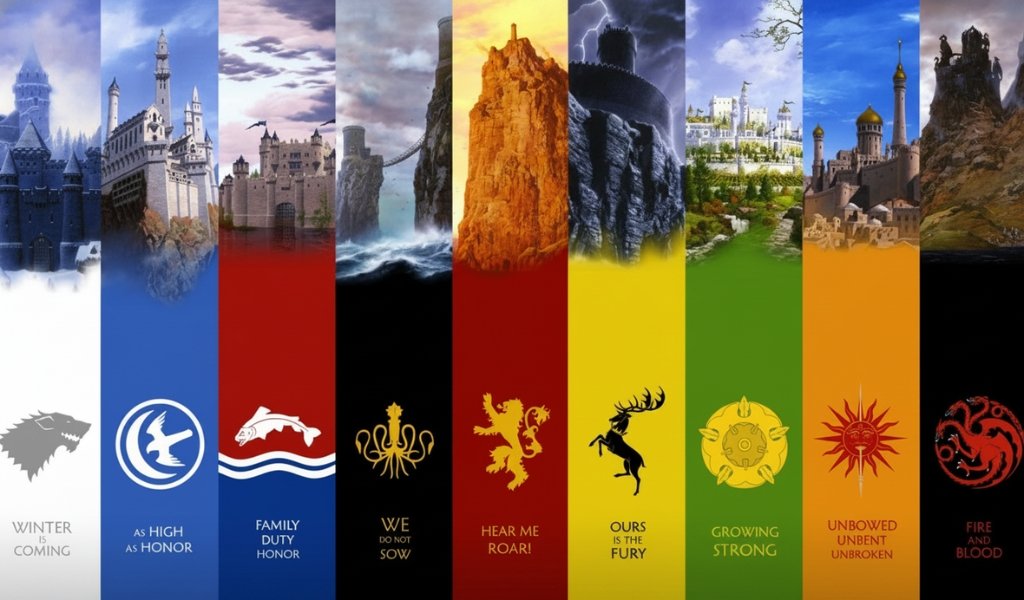
Westeros is divided into distinct geopolitical regions, each ruled by a Great House owing allegiance to the Iron Throne in the capital city of King’s Landing. The Iron Throne itself, forged from the melted swords of defeated lords by Aegon the Conqueror, serves as the ultimate symbol of supreme authority.
- House Stark of Winterfell: Rulers of the vast, harsh, and resource-scarce North. Their words, “Winter is Coming,” serve as both a warning and a cultural philosophy. Unlike other houses that boast of their wealth or ferocity, the Starks focus on preparedness and survival. They prize honor, loyalty, and duty, acting as the historic shield of the realm against the hidden dangers of the far north.
- House Lannister of Casterly Rock: The wealthiest family in Westeros, commanding the extensive gold mines of the Westerlands. Their official words are “Hear Me Roar!”, though they are far better known for the calculated phrase, “A Lannister always pays his debts.” This unofficial motto reflects their pragmatic approach to power, using financial leverage, bribery, and psychological intimidation to control their allies and crush their enemies.
- House Baratheon of Storm’s End: The ruling royal house at the series’ start, led by King Robert Baratheon, who won the throne through a bloody rebellion seventeen years prior. The Baratheons are characterized by their martial prowess, stubbornness, and volatile tempers, traits reflected in their house sigil, the crowned stag.
- House Targaryen: The ancient, deposed dynasty that originally unified the Seven Kingdoms using the devastating power of dragons. Governed by the belief in their own divine right and exceptionalism, they practiced incest for centuries to keep their dragon-riding bloodline pure. At the start of the series, the last surviving Targaryens live in destitute exile across the Narrow Sea, pursued by the assassins of King Robert.
The Magic and Mysticism
While the Southern kingdoms engage in political plotting, two supernatural threats anchor the edges of the map. In the far north stands The Wall, a 700-foot-tall structure of solid ice and ancient magic guarded by the Night’s Watch, a military order sworn to protect the realm from the mythical White Walkers. Over centuries, the Night’s Watch has degraded from an elite order of knights into a penal colony for criminals, thieves, and political exiles, leaving the realm dangerously unprepared for what lies beyond. Across the Narrow Sea, the dead remnants of magic begin to stir as ancient dragon eggs are brought back to life, fundamentally shifting the global balance of military power from conventional armies to weapons of mass destruction.
2. Season-by-Season Comprehensive Analysis
Season 1: The Sparks of War
The series opens with a fragile, decaying peace hanging over Westeros. When Lord Jon Arryn, the Hand of the King, dies under mysterious circumstances, King Robert Baratheon travels north to recruit his oldest friend, Eddard “Ned” Stark, to take his place. Ned, fiercely reluctant to leave the safety of the North, relocates to the treacherous capital of King’s Landing with his daughters, Sansa and Arya, only to find himself trapped in a toxic web of deceit. Ned’s investigation into Jon Arryn’s death leads him to a staggering realization: Robert’s three children with Queen Cersei Lannister, Joffrey, Myrcella, and Tommen, are completely illegitimate. They are the product of an ongoing incestuous affair between Cersei and her twin brother, Ser Jaime Lannister, meaning Robert has no true heirs.
Parallel stories unfold at the edges of the world, establishing the grand scope of the narrative. At the Wall, Ned’s bastard son, Jon Snow, joins the grim ranks of the Night’s Watch, quickly realizing that the noble brotherhood he envisioned is a harsh reality of survival. Across the Narrow Sea, the exiled Daenerys Targaryen is sold into marriage to the Dothraki warlord Khal Drogo by her ambitious, abusive brother Viserys. In exchange, Viserys expects a Dothraki army to cross the sea and reclaim the Iron Throne. However, as Daenerys adapts to the Dothraki culture, she finds her own inner strength, eclipsing her brother. Viserys’s erratic demands eventually lead to his execution when Khal Drogo pours a pot of molten gold over his head, giving him the “golden crown” he always desired.
The season reaches a devastating climax when King Robert is mortally wounded by a boar during a hunt. Before Ned can secure the succession and pass the throne to Robert’s rightful legal heir, Stannis Baratheon, he is betrayed by Petyr “Littlefinger” Baelish and the city watch. The petulant, sadistic new boy-king, Joffrey Baratheon, overrides the counsel of his mother and orders Ned’s public execution at the Sept of Baelor. This single act of tyranny completely shatters the peace of the realm, driving Ned’s eldest son, Robb Stark, to declare Northern independence and march south in open revolt, sparking the War of the Five Kings. In the east, following the tragic death of Khal Drogo from an infected wound, Daenerys steps into her husband’s funeral pyre alongside three fossilized dragon eggs. She emerges from the ashes completely unburnt, cradling three newly hatched dragons, bringing magic back to a world that had forgotten it.
Season 2: The War of the Five Kings
With the legitimacy of the Iron Throne completely broken, the realm fractures into a multi-front civil war. Five different men claim the title of king, each driven by a different philosophy of rule: Joffrey Baratheon claims the throne by blood right; Robb Stark is crowned King in the North by his people; Balon Greyjoy seeks to reclaim the ancient independence of the Iron Islands through conquest; and Robert’s two brothers, Stannis and Renly Baratheon, both claim the crown by virtue of birth order and military might.
The conflict between the Baratheon brothers introduces a terrifying new element to the war. Stannis, guided by a mysterious Red Priestess named Melisandre who worships the Lord of Light, embraces blood magic to break the political deadlock. Melisandre births a shadow creature that infiltrates Renly’s camp and assassinates him, allowing Stannis to absorb the majority of his brother’s massive army.
With his newly acquired forces, Stannis launches a massive naval assault directly against King’s Landing. The capital is saved only by the brilliant tactical intellect of Tyrion Lannister, who has been acting as Hand of the King. Tyrion deploys a volatile, unquenchable incendiary substance known as wildfire to destroy Stannis’s fleet in a massive green explosion at the monumental Battle of the Blackwater. When the city walls are breached, Tyrion leads a desperate counter-attack himself. Tywin Lannister arrives at the final hour with reinforcements from House Tyrell, securing the city, forcing Stannis into retreat, and cementing a wealthy new alliance.
In the North, the Starks face disaster from within. Theon Greyjoy, torn between his loyalty to Robb Stark and his desire to impress his biological father Balon, betrays his foster family and captures an undefended Winterfell. Unable to capture the young Stark heirs, Bran and Rickon, who escape into the crypts, Theon murders two farm boys and burns their bodies to fake the Stark princes’ deaths. Meanwhile, beyond the Wall, Jon Snow ventures deep into hostile territory with the Night’s Watch. Captured by the Wildlings, Jon is ordered by his commander, Qhorin Halfhand, to commit a tactical betrayal: Jon must kill Qhorin in a staged fight to convince the Wildling leader, Mance Rayder, that he has truly abandoned the Night’s Watch. In Essos, Daenerys navigates the deceptive, opulent politics of the merchant city of Qarth. Stripped of her wealth and seeing her dragons stolen, she enters the mystical House of the Undying, where she survives an array of illusions, defeats the warlocks using her dragons’ fire, and loots the city to buy a ship to continue her journey.
Season 3: Betrayal and Blood
The War of the Five Kings reaches a brutal, unexpected resolution that reshapes the geopolitical landscape of Westeros. Robb Stark wins every military engagement against the Lannister forces, earning the nickname the Young Wolf, but he fundamentally loses the political war. He breaks a crucial strategic marriage pact with Lord Walder Frey of the Twins by marrying a foreign healer, Talisa Maegyr, for love. Simultaneously, his mother Catelyn releases the high-value prisoner Jaime Lannister in a desperate, unsanctioned attempt to trade him for her captive daughters in King’s Landing. Outmaneuvered and desperate for troops to attack Casterly Rock, Robb attempts to make amends with House Frey by arranging a replacement marriage between his uncle, Edmure Tully, and a daughter of Walder Frey.
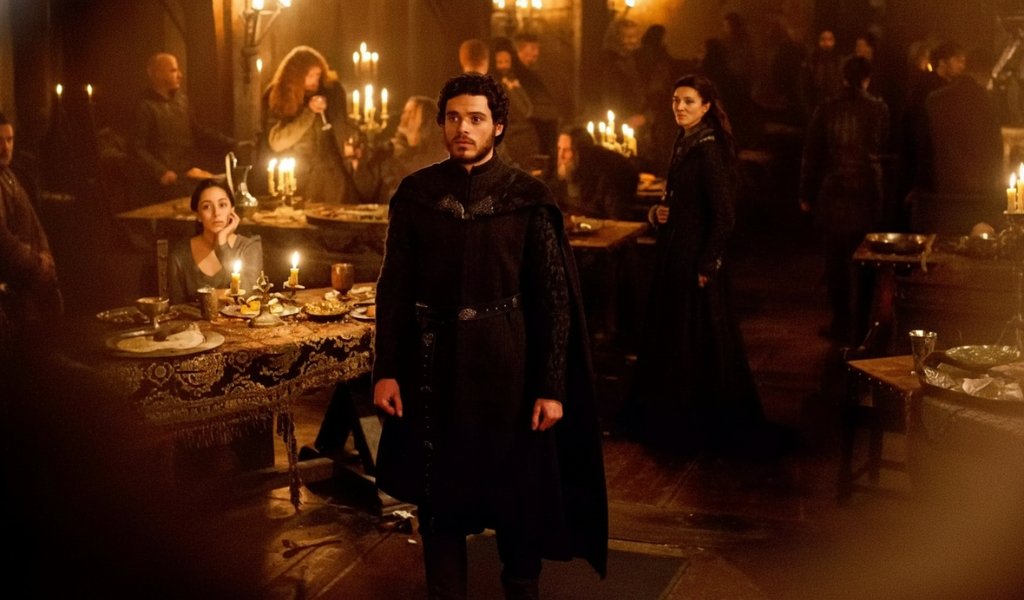
This setup culminates in The Red Wedding (“The Rains of Castamere”), which stands as one of the most shocking, structurally significant turning points in cinematic history. Orchestrated behind the scenes by Tywin Lannister, Walder Frey and the Northern turncoat Roose Bolton ruthlessly break the sacred laws of hospitality. During the wedding feast, musicians pull out crossbows and slaughter Robb Stark, his pregnant wife Talisa, his mother Catelyn, and the entire vanguard of the Northern army. The rebellion is completely crushed; the North is handed to the Boltons as the new Wardens, and House Frey takes control of Riverrun.
Simultaneously, Jon Snow’s undercover mission leads him to fall deeply in love with a Wildling spearwife named Ygritte. His loyalty to the Night’s Watch is tested to its limits as he climbs the Wall with the Wildling raiding party. When ordered to execute an innocent old man to prove his allegiance, Jon refuses, breaks his cover, and escapes back to Castle Black, leaving a heartbroken Ygritte behind. In Essos, Daenerys Targaryen builds a true military powerhouse. Traveling through the slave-trading hubs of Slaver’s Bay, she outwits the masters of Astapor. Pretending not to speak Valyrian, she agrees to trade one of her dragons for an elite slave army known as the Unsullied. The moment the contract is sealed, she commands the Unsullied to turn on their former masters, uttering the iconic phrase “Dracarys” to have her dragon burn the slave rulers alive. She frees all slaves, absorbs them into her army as free men, and begins a sweeping, bloody campaign of liberation across Yunkai and Meereen.
Season 4: The Peak of Intrigue
With the Stark rebellion systematically eliminated, the Lannisters solidify their hold on the Iron Throne. King’s Landing prepares for the highly anticipated royal wedding of King Joffrey to Margaery Tyrell, a union designed to merge Lannister military power with Tyrell agricultural wealth. However, the celebration turns into an immediate political nightmare when Joffrey is publicly poisoned during his own wedding feast, gasping for air as his face turns purple, an event dubbed The Purple Wedding. Cersei, consumed by grief and rage, immediately accuses her estranged brother, Tyrion Lannister, of orchestrating the murder.
Tyrion’s trial becomes the narrative and emotional center of the season. His sister Cersei systematically manipulates witnesses, and his own father, Tywin Lannister, sits as chief judge, eager to use the opportunity to sentence his hated son to death or exile. The trial hits a breaking point when Tyrion’s former lover, Shae, delivers false, deeply damaging testimony. Enraged by the betrayal of a city he saved at the Blackwater, Tyrion delivers a scathing monologue, declaring he wishes he had enough poison for the whole court, and demands a trial by combat.
Knowing he cannot win conventionally, Prince Oberyn Martell of Dorne volunteers to fight as Tyrion’s champion. Oberyn seeks personal vengeance against the Lannister enforcer, Ser Gregor “The Mountain” Clegane, who raped and murdered Oberyn’s sister Elia during the sack of King’s Landing decades prior. The resulting duel is a masterclass in tension. Oberyn dominates the fight with his swift spear work, forcing the Mountain to the ground. However, Oberyn’s demand for a public confession allows the wounded Mountain to catch him off guard, trip him, and graphically crush his skull, securing Tyrion’s death sentence. Facing execution, Tyrion is broken out of prison by his brother Jaime and Varys. Before escaping across the Narrow Sea, Tyrion detours to his father’s chambers, discovering Shae in Tywin’s bed. In a state of pure emotional devastation, Tyrion strangles Shae and murders his father Tywin with a crossbow while Tywin sits on the privy.
At the Wall, the Night’s Watch successfully defends Castle Black against a massive assault by 100,000 Wildlings. The battle claims the life of Ygritte, who dies in Jon Snow’s arms as the courtyard burns around them. Stannis Baratheon arrives unexpectedly with his mercenary army, crushing the Wildling forces and saving the Night’s Watch.
Season 5: Power Vacuums and Fanaticism
The sudden deaths of Tywin Lannister and Joffrey Baratheon leave a catastrophic power vacuum in King’s Landing. Cersei Lannister assumes control as Queen Regent but finds her authority challenged by the growing popularity of Margaery Tyrell, who has married Cersei’s weak youngest son, the newly crowned King Tommen. Seeking to undermine the Tyrell family, Cersei makes a fatal political miscalculation: she reinstates the Faith Militant, arming a puritanical religious sect known as the Sparrows, led by the ascetic High Sparrow. The religious zealots quickly turn on the corrupt crown. They arrest Margaery Tyrell, her brother Loras, and eventually Cersei herself for sins of the flesh and treason. To earn her temporary release back to the Red Keep to await trial, Cersei is forced to endure a humiliating, naked Walk of Atonement, her hair shorn as she walks through the jeering, abusive crowds of the capital while a septa rings a bell shouting “Shame!”
In the North, the sadistic Ramsay Bolton solidifies his family’s illegitimate hold on Winterfell by forcibly marrying Sansa Stark, who had been smuggled out of King’s Landing by Littlefinger. Sansa suffers horrific abuse at Ramsay’s hands, turning her storyline into a grim tale of survival. Stannis Baratheon’s march on Winterfell ends in complete disaster; stranded in unyielding icy conditions and hit by Ramsay’s guerrilla attacks, he allows Melisandre to burn his young daughter, Shireen, at the stake as a sacrifice to the Lord of Light. The horrific act breaks his army’s morale; half his men desert, his wife commits suicide, and Stannis is swiftly defeated and executed by Brienne of Tarth outside Winterfell.
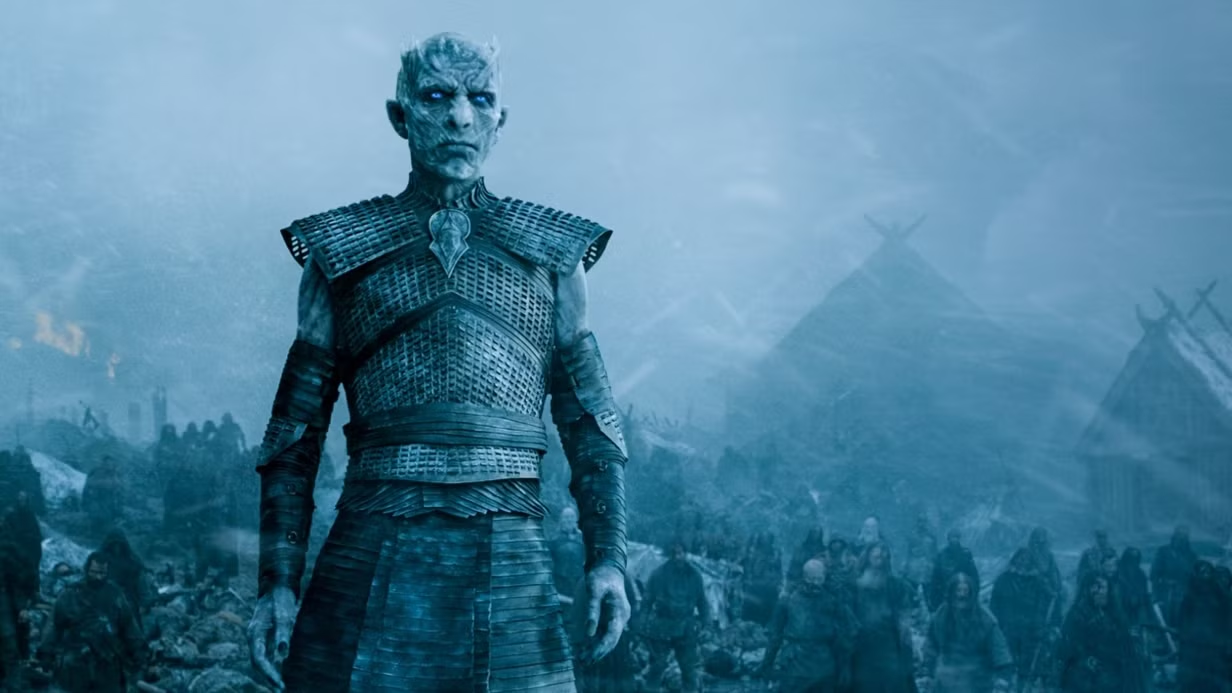
At Castle Black, Jon Snow is elected Lord Commander of the Night’s Watch. Recognizing that the living must unite against the dead, he makes the highly controversial decision to forge an alliance with the surviving Wildlings, bringing them south of the Wall. This leads to the terrifying Battle of Hardhome, a fishing village where the dead launch a sudden, overwhelming assault. Jon manages to kill a White Walker using his Valyrian steel sword, Longclaw, discovering its properties. As he escapes by boat, Jon watches in horror as the Night King walks onto the dock, raises his arms, and effortlessly resurrects thousands of recently fallen Wildlings into his undead army.
Upon returning to Castle Black, Jon is branded a traitor by a mutinous faction of his own men, led by Alliser Thorne, and is systematically stabbed to death in the snow.
Season 6: Resurrection and Reclamation
Season 6 marks a massive shift as the show completely outpaced the narrative timeline of George R.R. Martin’s published books. At Castle Black, a grief-stricken Melisandre uses her remaining, battered faith to perform a resurrection ritual on Jon Snow, who awakens gasping for breath. Released from his lifelong vows by his literal death, Jon leaves the Night’s Watch and reunites with Sansa Stark, who has successfully escaped the clutches of Ramsay Bolton with the help of Theon Greyjoy. Together, they rally the remaining fractured Northern loyalists and Wildlings to reclaim their ancestral home in the breathtakingly chaotic Battle of the Bastards. Ramsay’s forces trap Jon’s army in a crushing wall of shields and piles of corpses. Just as all hope seems lost, Sansa arrives with the Knights of the Vale, secured via a secret pact with Littlefinger, crushing the Bolton lines from behind. Ramsay is captured and executed by Sansa, who feeds him to his own starving hounds, and the Northern lords declare Jon Snow the King in the North.
In King’s Landing, Cersei Lannister faces her final trial by the High Sparrow. Rather than submit to the court, she executes a devastating, pre-emptive strike. As the court gathers inside the Sept of Baelor, Cersei watches from the Red Keep as a massive cache of green wildfire, planted years ago beneath the structure, is detonated. The explosion instantly vaporizes the High Sparrow, the entire Tyrell leadership, and half the capital’s nobility. Grief-stricken by the sudden death of his wife Margaery in the blast, King Tommen commits suicide by silently jumping from a high window of the Red Keep. With no remaining heirs, Cersei claims the Iron Throne for herself as Queen Regnant, ruling through pure terror.
In Essos, Daenerys Targaryen survives captivity by the Dothraki, burns their patriarchal Khals inside their temple, and emerges unburnt once more to unite the entire nomadic population under her banner. After returning to Meereen to crush a naval siege by the slave masters using her three fully grown dragons, she finalizes her alliances. With the combined forces of the Dothraki, the Unsullied, a fleet provided by Yara and Theon Greyjoy, and her dragons, Daenerys finally sets sail west across the Narrow Sea to reclaim her birthright.
Season 7: The Alliances Collide
Daenerys Targaryen establishes her military headquarters at her ancestral birthplace, the island fortress of Dragonstone. Jon Snow travels south to meet her, refusing to bend the knee because his focus is entirely on the existential threat of the dead, but he desperately seeks her assistance and access to the island’s vast deposits of dragonglass. The two form a powerful alliance, which gradually evolves into a romantic relationship as they discover common ground.
Cersei Lannister proves to be a far more formidable adversary than anticipated, launching brilliant strategic counter-strikes with her new naval ally, Euron Greyjoy. The Lannisters successfully eliminate Daenerys’s southern allies, capturing Highgarden and Dorne, and draining the Tyrell wealth to pay off the Iron Bank of Braavos. In retaliation, Daenerys unleashes her Dothraki horde and Drogon upon a Lannister supply train in the devastating Loot Train Attack, demonstrating the raw, terrifying power of her dragons on Westerosi soil and burning the Lannister forces to ash.
To convince Cersei that the supernatural threat in the North is real, Jon Snow leads a dangerous expedition beyond the Wall to capture a living wight to bring to the capital. The mission goes sideways, trapping the team on a frozen lake surrounded by millions of the dead. Daenerys flies north to rescue them, but the excursion ends in a devastating tragedy: the Night King throws an ice spear with supernatural force, killing her dragon, Viserion, who sinks into the ice. The team manages to bring the captured wight to a tense summit at the Dragonpit in King’s Landing. While Cersei publicly agrees to an armistice after seeing the undead creature move, she secretly confides to Jaime that she intends to betray the alliance, staying behind while the Targaryen forces march north. Horrified by her complete lack of honor, Jaime abandons Cersei and rides north alone. The season ends with a catastrophic blow: the Night King resurrects Viserion into an undead wight dragon and uses his blue fire to blast a massive breach through the Wall, allowing the army of the dead to pour into the Seven Kingdoms.
Season 8: The End of an Era
The final season brings all converging storylines to an epic, highly controversial conclusion. The living gather at Winterfell to face the Army of the Dead in The Long Night. In a pitch-black, exhausting battle, the living are pushed to the brink of total annihilation as their defenses crumble and characters like Jorah Mormont and Theon Greyjoy fall. Just as the Night King reaches Bran Stark in the Godswood to erase the world’s memory, Arya Stark executes a stealth jump attack, switching her weapon from hand to hand and stabbing the Night King with a Valyrian steel dagger. His death instantly shatters the entire undead army into ice shards, saving humanity.
With the dead defeated, attention shifts back to the Iron Throne. Jon Snow learns his true identity from Samwell Tarly and Bran: he is actually Aegon Targaryen, the legitimate son of Rhaegar Targaryen and Lyanna Stark, making him the rightful heir to the Iron Throne ahead of Daenerys. Though Jon pledges his ongoing loyalty to her, the revelation fuels Daenerys’s growing paranoia and isolation, as she realizes the people of Westeros love Jon more than her. Her distress deepens when Cersei’s forces ambush her fleet, killing her second dragon, Rhaegal, and publicly executing her closest confidante, Missandei, outside the gates of King’s Landing.
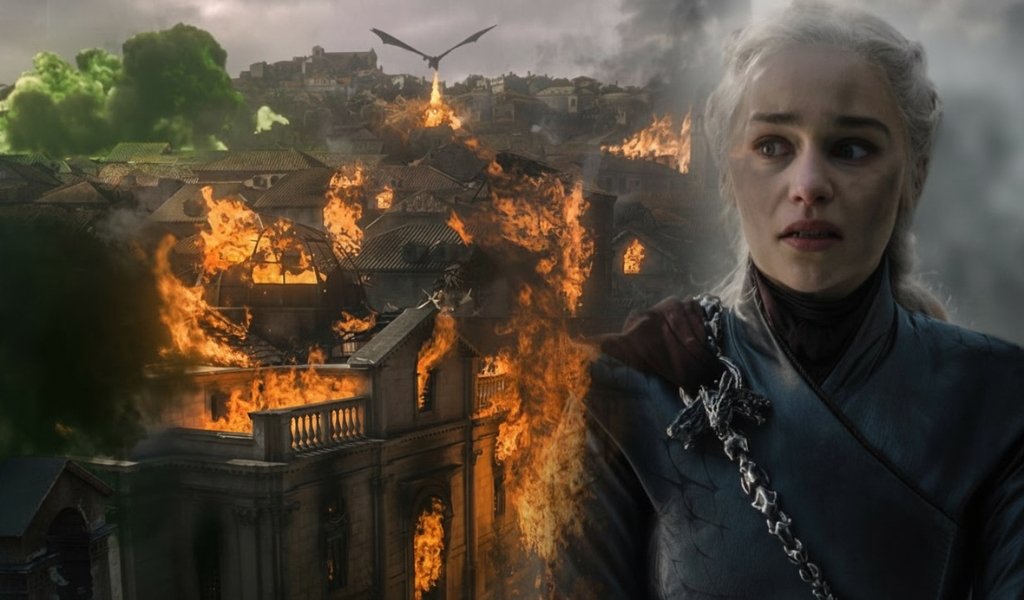
The final conflict culminates in the complete destruction of King’s Landing. Although the city’s defenses surrender quickly under the assault of Daenerys and her final dragon, Drogon, the accumulation of trauma, isolation, and betrayal drives her over the edge. She ignores the ringing bells of surrender and systematically burns the entire city, targeting innocent civilians and turning the capital into a graveyard of ash. Jaime and Cersei Lannister die together, crushed by falling rubble beneath the collapsing Red Keep.
In the aftermath, Daenerys stands before her armies, promising to launch a continuous war of global conquest to “break the wheel.” Realizing she has become the ultimate tyrant, a heartbroken Jon Snow stabs Daenerys during a final embrace in the ruined, ash-filled throne room. Drogon, in his grief, melts the Iron Throne into slag with his fire and carries her body away into the east.
A grand council of the remaining lords and ladies of Westeros meets to determine the future of the realm. They establish a new, semi-democratic system where kings are elected by the lords rather than by hereditary right. Bran Stark is chosen as the ruler, styled as “Bran the Broken.” Sansa Stark successfully negotiates the North’s independence, becoming the Queen in the North. Tyrion Lannister is appointed Hand of the King to repair the broken realm, Arya Stark sets sail to explore the uncharted oceans west of Westeros, and Jon Snow is exiled back to the Night’s Watch, ultimately riding north into the true wild lands alongside the Wildlings.
3. Major Narrative and Character Evolutions
The true strength of Game of Thrones lies within its long-form character psychology. Below is a comprehensive analysis of how the core players evolved across the eight seasons:
Jon Snow: The Burden of Honor
Jon Snow begins his journey as the brooding, illegitimate outcast of Winterfell, joining the Night’s Watch to find a sense of belonging. His character arc is defined by the heavy burden of honor, heavily mirroring his adoptive father, Ned Stark. Jon is consistently thrust into leadership positions he does not seek, from Lord Commander to King in the North. His true identity as Aegon Targaryen serves as the ultimate narrative irony: the man who has the greatest legal claim to the Iron Throne wants absolutely nothing to do with it. His final act, assassinating Daenerys, represents the ultimate sacrifice of his personal honor for the safety of the realm, forcing him into a poetic exile back to the wild fringes of the world where he truly belongs.
Daenerys Targaryen: The Descent of a Liberator
Daenerys Targaryen’s transformation is a tragic examination of how absolute power corrupts good intentions. She begins as an exiled, timid political pawn sold into marriage. As she acquires her dragons and liberates the cities of Essos, she develops a messiah complex, believing her righteous destiny justifies any level of violence. When she arrives in Westeros, she is met with political resistance rather than the adulation she expected. The loss of her dragons, her closest advisors, and the realization that Jon Snow has a superior claim to the throne breaks her psychological stability. Her choice to burn King’s Landing is the terrifying culmination of her house words, “Fire and Blood,” transforming her from a liberator into the final tyrant of the series.
Tyrion Lannister: The Brilliant Outcast
Tyrion Lannister represents intellect in a world governed by brute force. Despised by his father Tywin and sister Cersei for his dwarfism, Tyrion uses hedonism and sharp wit as a psychological shield. His peak operational brilliance is seen during his tenure as Hand of the King in Season 2, where his tactical management saves the capital. However, his deep-seated desire for familial acceptance consistently conflicts with his political instincts. His journey through exile leads him to Daenerys, but his tactical miscalculations in the final seasons show a man broken by the trauma of his family’s mutual hatred. His appointment as Hand to Bran the Broken represents a chance at systemic redemption, tasked with rebuilding the very realm his family helped tear apart.
Cersei Lannister: The Ruthless Matriarch
Cersei Lannister is driven by a fatal mixture of paranoia, fierce maternal love, and a desperate desire for power in a deeply patriarchal society. Her character is heavily defined by Maggy the Frog’s prophecy, which predicted she would lose all her children and be supplanted by a younger, more beautiful queen. Every ruthless action she takes, from arming the High Sparrow to destroying the Sept of Baelor, is a defensive reaction designed to maintain control and protect her lineage. Her tragedy lies in the fact that her pursuit of power ultimately isolates her completely, leading to the destruction of her family and her unceremonious death beneath the ruins of the empire she sacrificed everything to hold.
Sansa and Arya Stark: Contrasting Paths of Survival
The two Stark sisters represent completely opposing, yet equally successful, survival strategies.
- Sansa Stark begins as a naive, romantic girl dreaming of southern court life. Through her political captivity under Joffrey, Cersei, Littlefinger, and Ramsay Bolton, she undergoes a brutal education in political survival. She evolves into a cold, pragmatic statesman, mastering the political chess game of Westeros and ultimately securing Northern independence as an independent queen.
- Arya Stark rejects traditional gender roles from the start. Her path is one of physical and martial transformation. Witnessing her father’s execution drives her down a path of vengeance, leading her to train with the Faceless Men of Braavos. She becomes the ultimate phantom assassin, using her skills to avenge her family at the Red Wedding and ultimately save humanity by killing the Night King, before choosing a life of exploration over political nobility.
4. Full Character Archetype and Fate Reference Matrix
| Character | Starting Status (Season 1) | Final Fate (Season 8) | Primary Driving Force |
| Jon Snow | Illegitimate bastard; Night’s Watch recruit. | Exiled to the Far North with the Wildlings. | Duty, honor, and protecting the living. |
| Daenerys Targaryen | Exiled princess; sold into marriage. | Assassinated by Jon Snow in the throne room. | Justice, liberation, and birthright. |
| Tyrion Lannister | Sarcastic, hedonistic noble outcast. | Appointed Hand of the King to Bran Stark. | Intellect, validation, and peace. |
| Cersei Lannister | Queen Consort; bitter political matriarch. | Crushed by the collapse of the Red Keep. | Power, lineage, and self-preservation. |
| Sansa Stark | Naive noble daughter; romantic dreamer. | Crowned independent Queen in the North. | Sovereignty, family, and home. |
| Arya Stark | Rebellious tomboy; aspiring warrior. | Sailing into uncharted waters west of Westeros. | Vengeance, justice, and personal freedom. |
| Jaime Lannister | Arrogant Kingslayer; elite knight. | Died alongside Cersei in the collapsing capital. | Core identity, honor, and addictive love. |
| Bran Stark | Crippled young lord; aspiring climber. | Elected King of the Six Kingdoms. | Cosmic memory, fate, and preservation of history. |
| Joffrey Baratheon | Cruel prince; spoiled heir. | Poisoned at his own wedding feast. | Sadism, unchecked power, and vanity. |
| Ramsay Bolton | Illegitimate bastard son of Roose Bolton. | Executed by Sansa Stark via his own hounds. | Terror, cruelty, and securing legitimacy. |
5. The Production Milestones and Structural Legacy
The technical scale of Game of Thrones completely reset the parameters of what was achievable on a television budget. The series moved away from traditional studio sets, utilizing expansive on-location filming across Northern Ireland, Croatia, Iceland, Spain, Morocco, and Malta. These real-world locations lent an irreplaceable texture of authenticity to the world-building, making the distinct climates of Winterfell and King’s Landing feel tangible to global audiences.
The evolution of the show’s action choreography set a new standard for television. Early seasons relied heavily on off-screen resolutions or brief skirmishes due to budgetary limitations. However, by Season 5 and 6, the production was executing massive, cinematic battle sequences. The Battle of the Bastards utilized hundreds of real horses, thousands of extras, and a complex multi-cam setup to create a claustrophobic, terrifyingly realistic depiction of medieval warfare that rivaled major Hollywood film releases. Similarly, The Long Night in Season 8 stood as the longest filmed battle sequence in cinematic history, requiring 55 consecutive nights of grueling night shoots in freezing conditions.
Furthermore, the show’s musical landscape, composed by Ramin Djawadi, functioned as an essential narrative tool. Djawadi created distinct, leitmotif-driven themes for each Great House and major character. The cello-heavy melancholy of “The Rains of Castamere” became an ominous warning of Lannister ruthlessness, while the soaring strings of the Targaryen theme mirrored the growth of Daenerys’s dragons. The use of the piano in “Light of the Seven” during the Season 6 finale marked the first time the instrument was used in the series, deliberately breaking the show’s established musical vocabulary to signal the impending, catastrophic wildfire explosion.
6. The Complex Cultural Impact of the Final Season
The legacy of Game of Thrones is a nuanced topic of discussion within media history. The final season polarized audiences worldwide, sparking intense debates regarding the pacing of long-form television narratives. Critics and fans expressed profound frustration with the rapid compression of the final six episodes, which truncated complex character arcs that had been meticulously built over a decade. The most prominent point of contention was Daenerys Targaryen’s rapid descent into madness, which many felt lacked the necessary narrative breathing room to feel fully earned, despite being heavily foreshadowed throughout her journey.
This narrative acceleration stood in sharp contrast to the slow-burn, dialogue-heavy political plotting that characterized the show’s universally acclaimed early seasons. When the show ran out of source material from George R.R. Martin’s uncompleted literary works, the structural focus shifted from intricate political maneuvering to high-spectacle, action-driven event television.
Despite the divisive nature of its conclusion, the show’s overall impact on the global entertainment landscape remains undeniable. Game of Thrones proved that complex, uncompromising high fantasy could achieve unprecedented mainstream success, effectively ending the era where fantasy was viewed as a niche market. It paved the way for massive network investments in big-budget, prestige genre television across the entire streaming industry. The enduring strength of the brand is fully visible in its expanded franchise universe, where spin-offs like House of the Dragon continue to capture massive global audiences. Ultimately, the complex world of Westeros remains a defining pillar of modern pop culture, remembered as one of the last true monocultural viewing experiences in television history.
Frequently Asked Questions (FAQs)
Q1: What are the main differences between Westeros and Essos?
A: Westeros is a structured, feudal continent ruled by Great Houses competing for a single crown, the Iron Throne. Essos is a vast, exotic eastern continent made of independent city-states, nomadic cultures like the Dothraki, and mercenary armies driven by trade and magic.
Q2: Why is House Targaryen so significant to Westeros history?
A: House Targaryen is the ancient, dragon-riding dynasty that originally conquered and unified the Seven Kingdoms, forging the Iron Throne. Although they were exiled before the show begins, their legacy and Daenerys’s return form the core of the entire story.
Q3: What sparked the War of the Five Kings?
A: The war was triggered by the execution of Ned Stark and doubts over the legitimacy of King Joffrey’s birthright. This led Joffrey, Stannis Baratheon, Renly Baratheon, Robb Stark, and Balon Greyjoy to all claim sovereignty simultaneously.
Q4: What was the “Red Wedding” and why did it matter?
A: It was a shocking massacre where King Robb Stark, his family, and his army were betrayed and murdered by the Freys and Boltons under Tywin Lannister’s orders. It effectively crushed the Northern rebellion and secured Lannister control.
Q5: How did Jon Snow’s true heritage change the story?
A: Revealed to be Aegon Targaryen, the legitimate son of Rhaegar Targaryen and Lyanna Stark, Jon was the rightful heir to the Iron Throne. This truth shattered his alliance with Daenerys, fueling the paranoia that led to the finale’s climax.
Q6: What happened to the Iron Throne in the finale?
A: Following Daenerys’s death, the dragon Drogon melted the physical Iron Throne with dragonfire, symbolically ending the cycle of tyranny. The realm then transitioned to an elective monarchy, choosing Bran Stark as King.
Q7: Why did the North become independent at the end?
A: Sansa Stark successfully negotiated secession because the North had sacrificed the most for its freedom and refused to bend the knee to a southern ruler again. This resulted in her coronation as Queen in the North.
Q8: Why was the show’s musical score so important?
A: Composer Ramin Djawadi used distinct, house-specific themes, such as the Lannisters’ “Rains of Castamere,” to tell the story audibly. This built massive emotional weight and signaled character shifts before they happened on screen.