
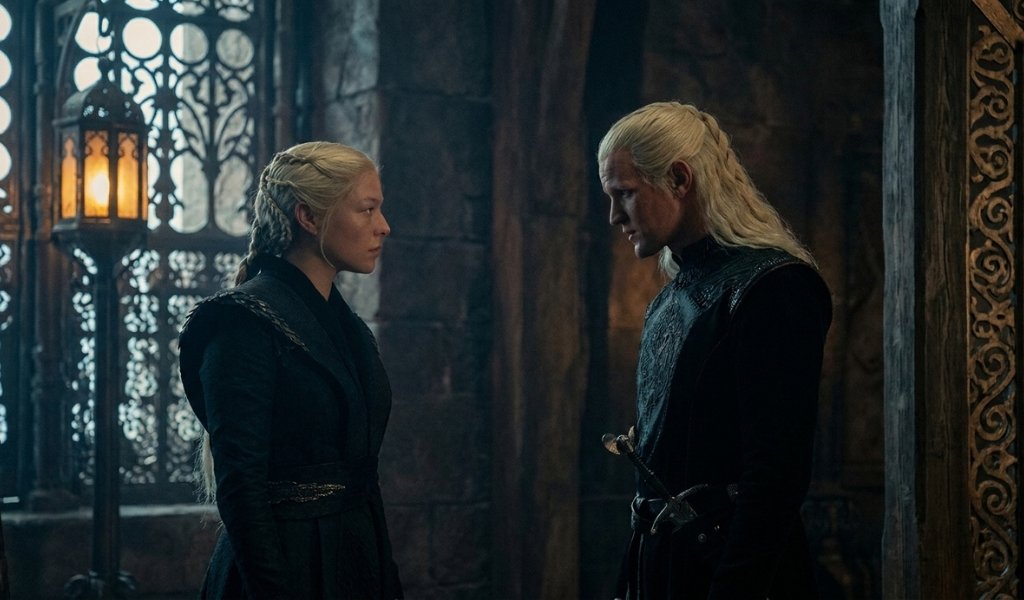

House of the Dragon Season 3 Episode 4 Book Changes: Every Major Divergence from Fire & Blood
Season 3 of House of the Dragon has never been shy about rewriting George R.R. Martin’s Fire & Blood. But Episode 4 takes the creative liberties to a new level entirely. From show-original characters reshaping entire battle sequences to a childhood retcon that fundamentally alters one of the Dance’s most beloved figures, this episode packs more hotd season 3 episode 4 book vs show divergences into a single hour than most episodes manage across a full season.
For book readers, that’s both thrilling and occasionally disorienting. The show isn’t simply adapting Fire & Blood, it’s reconstructing it, filling in the gaps that Martin’s fictional-historian framing device deliberately obscured, and making bold narrative choices that will define how casual viewers understand the Dance of the Dragons going forward.
This breakdown covers every major house of the dragon season 3 episode 4 book changes scene by scene, analyzing what’s been preserved, what’s been invented, and what it all means for the episodes ahead.
Small Council Shakeups: Rhaenyra’s Struggling Reign in King’s Landing
One of the quieter but most telling divergences in Episode 4 concerns Rhaenyra’s inner circle. On the show, she formally appoints Grand Maester Orwyle and Torrhen Manderly as Master of Coin to her council, presenting them as functional if fragile pillars of her administration.
In Fire & Blood, that’s simply not where Orwyle’s story goes at this point in the war. By the time the Dance reaches its bloodiest chapters, Orwyle is a prisoner, not an advisor. He’s eventually captured by the Greens and spends a significant portion of the conflict in captivity, writing his confessions. The show sidesteps this entirely, repurposing Orwyle as a loyal (if anxious) servant to Rhaenyra’s cause.
Torrhen Manderly’s elevation is similarly show-original. His presence as Master of Coin reflects the show’s broader effort to ground Rhaenyra’s government in named, recurring characters rather than the rotating cast of historical footnotes that populate Martin’s text.
The effect is a Rhaenyra who looks more like a queen trying to govern and less like one watching her court dissolve in real time. Whether that’s a more dramatically satisfying version of her arc remains to be seen, but the contrast with the book is stark.
The Tumbleton Divergence: Hugh Hammer’s Family and the Green Threat
Tumbleton is one of the Dance’s most brutal turning points, and tumbleton house of the dragon season 3 is shaping up to be just as bloody on screen though with an entirely invented emotional core.
In Fire & Blood, Hugh Hammer is a dragonseeds who rises to prominence through sheer violence and ambition. He has no named wife, no family anchoring his motivations, and no domestic tragedy to humanize or complicate his eventual treachery. He is, largely, a force of brute will.
The show introduces Kat, Hugh’s wife, as a significant presence at Tumbleton. She’s not a footnote; she’s a POV into the chaos, and the green soldiers’ threat toward her and the civilians around Tumbleton gives Hugh’s arc an emotional weight that the source material never provides. More significantly, Kat’s brother is killed by Daeron under Ormund Hightower’s manipulation, a scene that is entirely absent from Fire & Blood and serves a very specific narrative purpose: it positions Hugh’s eventual turn not as naked ambition, but as grief-fueled rage with a clear villain to blame.
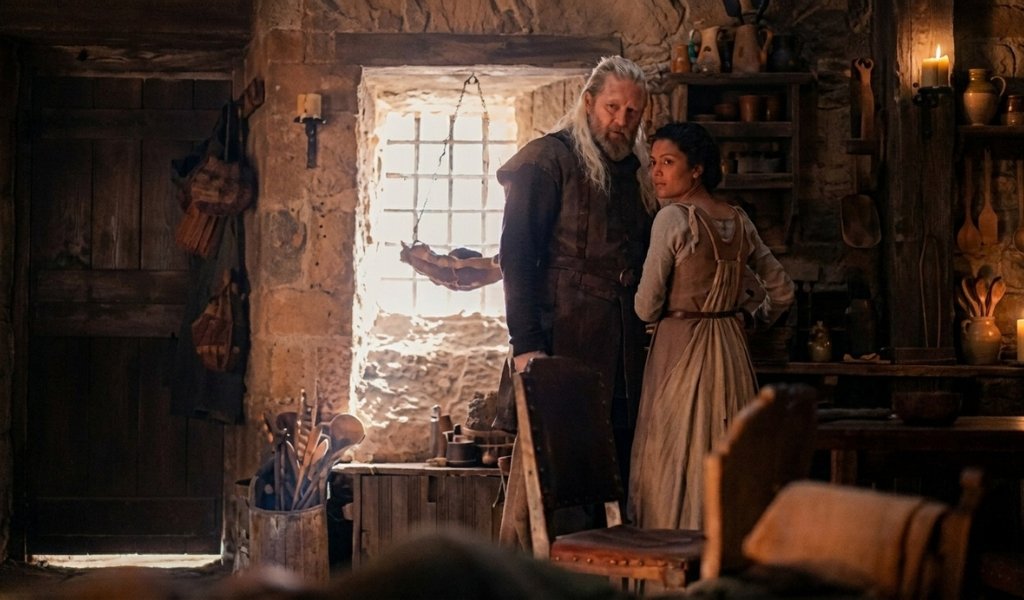
The hugh hammer wife tumbleton storyline is the show’s most deliberate original invention in this episode. It’s a smart creative choice on paper, transforming Hugh from a flat historical villain into someone viewers might genuinely mourn when the Two Betrayers storyline plays out.
Daeron Targaryen and Oldtown: A Retconned Childhood Changes Everything
Of all the house of the dragon vs fire and blood changes in Episode 4, the retconning of Daeron Targaryen’s backstory may be the most consequential for long-term lore fidelity.
In Fire & Blood, Daeron fostered at Oldtown at the age of twelve old enough to have formed meaningful bonds with his family and the Red Keep before his departure. His time with House Hightower shaped him, but he arrived there as a boy with a history, a personality, and a sense of who he was.
Daeron targaryen oldtown season 3 takes a radically different approach. The show depicts Daeron being sent to Oldtown as an infant, essentially raised entirely within the Hightower orbit with virtually no formative connection to his Targaryen family. The implication is that Oldtown made him realize that his identity is almost entirely a product of Ormund Hightower’s household.
This matters enormously because of what follows: Ormund Hightower declares Daeron king in a scene that has no parallel in the source material. In Fire & Blood, no such declaration occurs. Ormund is a loyalist fighting for the Green cause, not someone who crowns a rival claimant mid-war.
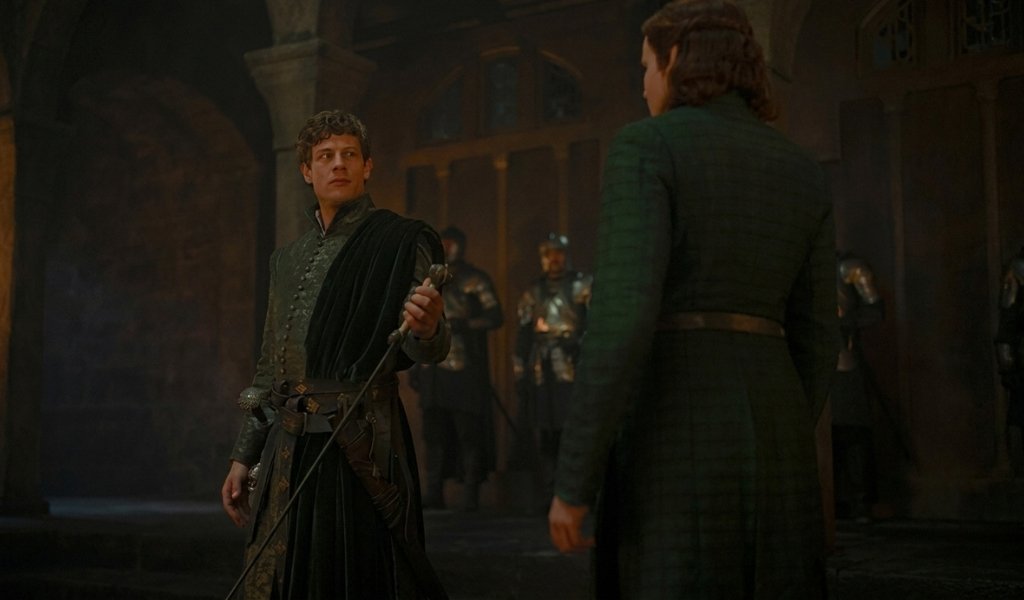
The show’s version turns Daeron into a potential political flashpoint, a figure whose claim could complicate or even threaten Aegon II’s legitimacy among the Greens. Whether the writers intend to follow through on that tension or use it as a temporary dramatic beat remains unclear, but the departure from Martin’s text is significant either way.
Criston Cole and Gwayne Hightower Arrive at Harrenhal
In Fire & Blood, Criston Cole and Aemond Targaryen arrive at Harrenhal together. Their joint occupation of that cursed stronghold is central to the book’s military narrative during this phase of the war.
The show has necessarily diverged from this arrangement because of events in Episode 2: Aemond was stabbed, leaving him sidelined and conspicuously absent from Harrenhal in Episode 4. Instead, it’s Criston Cole and Gwayne Hightower who arrive at the castle, a pairing that reflects the show’s interest in the Hightower siblings as parallel figures on opposite sides of the conflict.
The more pointed departure concerns Gwayne’s survival. In Fire & Blood, Gwayne Hightower is already dead by this point in the narrative, killed during earlier military engagements. The show keeps him breathing and politically active, using him as both a foil for Criston and a narrative tether to Alicent’s storyline. His presence at Harrenhal is entirely show-original.
Aemond’s absence due to his stabbing wound also changes the strategic calculus at Harrenhal considerably. The book’s version of these events has Aemond as the dominant, terrifying presence in that stronghold. Without him, the show must redistribute that menace and Criston, however capable, carries a different kind of threat.
Aegon, Sunfyre, and the Question: Is Sunfyre Alive After Rook’s Rest?
One of the most emotionally resonant sequences in Episode 4 involves Aegon II’s reunion with his dragon following the catastrophic events at Rook’s Rest. Aegon, badly burned and barely functional, finds Sunfyre and insists the dragon is alive.
Is Sunfyre alive after Rook’s Rest? On the show, yes. And critically, this matches book canon. In Fire & Blood, Sunfyre survives Rook’s Rest despite horrific injuries, including a damaged wing that prevents flight. The dragon lingers, wounded and grounded, and remains a significant figure in the story’s later chapters.
The show’s handling of Aegon’s reunion leans into the emotional dimension that Fire & Blood, told through a historian’s remove, can only gesture at. Seeing Aegon broken himself reach out to an equally broken Sunfyre is the kind of scene Martin’s format doesn’t accommodate, and it lands with genuine weight.
This is one of the clearest examples of the show improving on the source material’s emotional clarity while remaining faithful to its core facts.
Rhaena Targaryen and Sheepstealer: Taking Over Nettles’ Storyline
The Vale plotline represents one of the most structurally significant house of the dragon season 3 episode 4 book changes, because it involves not just a changed character beat but the wholesale reassignment of a beloved book character’s arc.
In Fire & Blood, Nettles, a dragonseed of ambiguous origins, is the one who bonds with Sheepstealer, a wild and dangerous dragon of the smallfolk. Her relationship with Daemon Targaryen and her eventual fate are among the most debated and emotionally complex threads in Martin’s text.
The show has replaced Nettles almost entirely with Rhaena Targaryen.In Episode 4, Rhaena targaryen sheepstealer season 3 introduces a major twist: Caraxes flies Daemon to where Sheepstealer’s lair is, leading to an emotional reunion with his daughter Rhaena, who is discovered living in self-imposed exile.This placement positions her as the dragonrider who will take on the role Nettles played in the source material. Meanwhile, Princes Joffrey, Aegon the Younger, and Viserys are sent to Pentos a logistical decision that tracks with the book but is given fresh dramatic framing through Rhaena’s perspective.

The omission of Nettles is a legitimate creative loss for book readers. She’s a fascinating figure whose origins and loyalties remain deliberately opaque in Fire & Blood, and her relationship with Daemon carries genuine ambiguity. Rhaena, as a known and established character, changes the emotional texture of the Sheepstealer storyline considerably though she brings her own compelling arc to the role.
Daemon’s dilemma in the Vale also shifts. His torn loyalties between Rhaenyra and whatever connection he develops with Rhaena (in place of Nettles) will play out differently, with less moral ambiguity built into the premise from the start.
Helaena’s Captivity and the Pregnancy That Changes the Timeline
The final major divergence in Episode 4 concerns Helaena Targaryen. Held captive and increasingly fragile, she’s one of the show’s most quietly devastating presences this season.
The twist that lands hardest: Alicent discovers Helaena is pregnant. This revelation hints at the upcoming arrival of Prince Maelor, a character whose existence raises deeply uncomfortable questions about what Helaena endured during her captivity.
Fire & Blood is deliberately ambiguous on the specifics of Maelor’s conception. The show, by staging Alicent’s discovery as a dramatic revelation in Episode 4, is moving closer to confronting those implications directly rather than letting them remain historical speculation. The timeline of the pregnancy also introduces potential continuity questions that the back half of the season will need to address carefully.
For now, the scene functions primarily as a gut-punch one of several in an episode that understands exactly where to apply pressure.
What These Changes Mean for the Back Half of Season 3
Episode 4 of House of the Dragon Season 3 is, in many ways, a map of the show’s broader relationship with Fire & Blood. It keeps the skeleton of Martin’s history, the battles, the deaths, the political fractures while systematically replacing the connective tissue with original invention.
Some of those inventions are genuinely brilliant. Kat’s storyline at Tumbleton, Aegon’s reunion with Sunfyre, and Helaena’s pregnancy revelation all demonstrate what the show can do when it fills Martin’s deliberate gaps with emotionally grounded drama. Others, Ormund crowning Daeron, Daeron’s infant fostering, Nettles’ erasure represent more fundamental restructurings that will either pay off magnificently or create narrative debt as the season progresses.
What’s clear is that the show is no longer content to follow Fire & Blood chapter by chapter. It’s writing its own version of the Dance, one that happens to share characters and catastrophes with Martin’s text. For lore enthusiasts, that means every episode now requires a double reading: what happened in the book, and what the show has chosen to do instead.
Both versions remain worth following.
Frequently Asked Questions
What are the biggest House of the Dragon Season 3 Episode 4 book changes?
The most significant departures include Rhaenyra appointing Orwyle (a prisoner in the book) to her council, the introduction of Hugh Hammer’s show-original wife Kat at Tumbleton, Ormund Hightower declaring Daeron king (which never occurs in Fire & Blood), Daeron being sent to Oldtown as an infant rather than at age 12, and Rhaena Targaryen taking over Nettles’ Sheepstealer storyline.
Is Nettles replaced by Rhaena in House of the Dragon Season 3?
Effectively, yes. The show has reassigned Nettles’ core book arc bonding with Sheepstealer in the Vale and becoming entangled in Daemon’s loyalties to Rhaena Targaryen. Nettles has not appeared on screen in Season 3, and the Sheepstealer plotline is being developed entirely through Rhaena’s perspective.