

House Staunton of Rook’s Rest: History, Legacy, and the Dance of the Dragons
Few houses in George R.R. Martin’s sprawling chronicle of Westeros carry the quiet, stubborn dignity of House Staunton of Rook’s Rest. They aren’t kingmakers. They don’t sit the Iron Throne or command armies that shake continents. But when the sky above Blackwater Bay filled with fire and the Dance of the Dragons tore the realm apart, House Staunton stood its ground and paid for it in blood.
This Crownlands family, seated at the fortress of Rook’s Rest, occupies a fascinating space in Westerosi history. They’re minor enough to escape the obsessive scrutiny given to the Starks or Lannisters, yet significant enough to anchor one of the most visually stunning and narratively pivotal battles in Fire and Blood and its television adaptation, House of the Dragon. Their story is one of shifting allegiances, hard-won pardons, and a final, fiery stand that tested the limits of loyalty.
Below, we’re breaking down everything worth knowing about House Staunton history during the Dance of the Dragons: where they came from, how Lord Simon Staunton became a fixture of Queen Rhaenyra’s Black Council, what happened at the infamous Battle of Rook’s Rest, and how the wider Staunton family left its fingerprints across Westerosi politics for generations.
House Staunton History and Origins in the Crownlands
House Staunton’s story begins, as so many noble house histories do, with geography. Their ancestral seat, Rook’s Rest, sits perched above Blackwater Bay in the Crownlands a strategically valuable position that made the castle both a target and a shield for the surrounding territory.
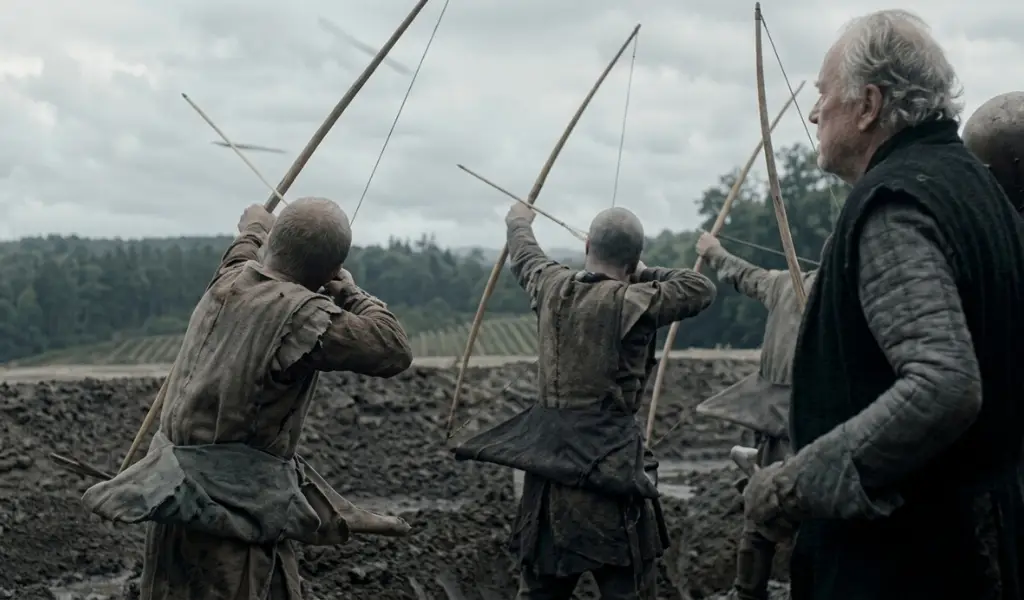
Rook’s Rest wasn’t just picturesque coastal real estate. The castle was built for war. Thick stone walls encircled the keep, while towers were positioned with a clear eye toward defense rather than aesthetics. Narrow murder holes lined its structure, allowing defenders to rain misery on any army foolish enough to attempt a direct assault. This wasn’t a decorative stronghold; it was a fortress designed by people who expected, eventually, to need it.
The Staunton sigil reflects that same understated grit: black wings set against a checkered black-and-white background, though some semi-canon sources describe it as two black wings on a white fess over checkered black and grey. Notably, neither the house’s official motto nor its arms appear directly in Martin’s text, which places the sigil description in the realm of supplementary lore rather than confirmed canon. Still, the imagery fits. Rooks are watchful, resilient birds, and House Staunton’s history is one of watching the political winds shift and adjusting accordingly.
That instinct for survival showed up early. During King Maegor I Targaryen’s brutal reign, House Staunton initially threw its support behind the king. But when the tide turned and Prince Jaehaerys Targaryen emerged as the stronger claimant, the Stauntons pivoted. Lord Staunton joined Lords Towers and Darklyn in yielding the Red Keep to Jaehaerys, Princess Rhaena, and Princess Alysanne a calculated surrender that, unsurprisingly, came with consequences. The lords were imprisoned for their earlier loyalty to Maegor, though King Jaehaerys I eventually pardoned them, albeit at the cost of ceded lands. Lord Staunton would later travel to Dragonstone to meet with a young Jaehaerys, signaling a renewed, if cautious, relationship with the crown.
This pattern support the stronger power, adapt when necessary, and rebuild trust through service defines much of House Staunton’s history in the Crownlands. It’s not the stuff of legendary sagas, but it’s a survival strategy that kept the family relevant for generations, right up until the Dance of the Dragons forced them into a much higher-stakes gamble.
Simon Staunton and the Dance of the Dragons Role
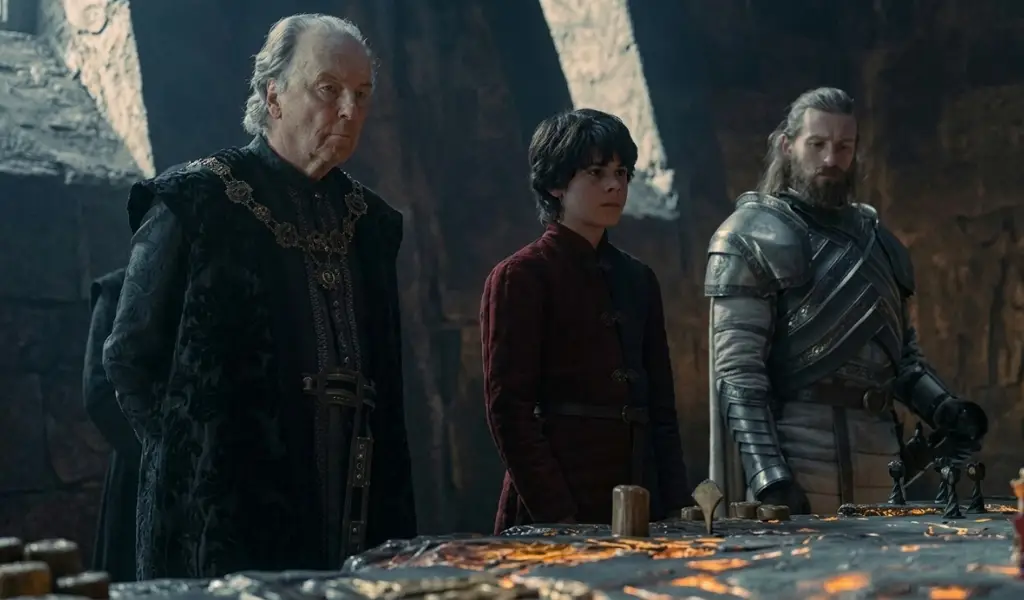
If House Staunton has a defining figure, it’s Lord Simon Staunton. Unlike his ancestors, who tended to hedge their bets, Simon Staunton made an unambiguous choice when the Dance of the Dragons erupted: he declared for Queen Rhaenyra.
This wasn’t a passive allegiance. Men-at-arms from House Staunton joined the fight on behalf of the Blacks during the War for the Stepstones, and Simon Staunton himself earned a seat on Rhaenyra’s Black Council a position that placed him at the center of the queen’s inner circle during the war’s most volatile stretch. As a member of the Black Council, Simon Staunton in House of the Dragon is portrayed attending strategy sessions at Dragonstone, where his voice carried real weight, even when it put him at odds with other council members.
One notable clash pitted Simon against Lord Bartimos Celtigar over matters of strategy. The disagreement didn’t shake his resolve. If anything, it reinforced how seriously he took his role in guiding Rhaenyra’s war effort. When the queen returned from the Stormlands, Simon Staunton was among those who welcomed her back, and he stood firmly by her side during one of the council’s tensest moments: the arrival of news that Prince Jaehaerys had been murdered. As the Greens launched a propaganda campaign blaming Rhaenyra for the killing, Simon’s commitment to her cause only hardened.
The turning point came when Baela Targaryen warned the council that Ser Criston Cole’s Green army was advancing. Simon immediately recognized the danger to his own home. Fearing that Cole’s forces would target Rook’s Rest en route to Harrenhal, he requested Rhaenyra’s permission to leave Dragonstone and return to his seat. His goal was straightforward: shore up Rook’s Rest’s defenses before the storm arrived.
It wasn’t enough to stop what came next, but it did put Simon Staunton exactly where history and Fire and Blood needed him: commanding the garrison at Rook’s Rest when Ser Criston Cole’s army laid siege to the castle.
The Battle of Rook’s Rest and Simon Staunton’s Sacrifice
The Battle of Rook’s Rest stands as one of the most dramatic set-pieces in the entire Dance of the Dragons, and Simon Staunton had a front-row seat to its chaos. As Cole’s forces closed in, Simon remained resolute in his defense of the castle, refusing to abandon his post or his loyalty to the Blacks despite the mounting threat.
What makes the Battle of Rook’s Rest so unforgettable isn’t just the ground assault it’s the dragons. Simon Staunton witnessed the extraordinary, terrifying spectacle of Meleys, Sunfyre, and Vhagar clashing in the skies above his home. This wasn’t a minor skirmish; it was a defining moment of the entire war, one that demonstrated with brutal clarity just how much devastation dragons could unleash when unleashed against each other. The battle’s ferocity, and the sheer scale of destruction it brought to Rook’s Rest, cemented the castle’s name in Westerosi history.
Simon Staunton’s leadership during the siege reflects the same quiet steadfastness that defined his time on the Black Council. He didn’t waver when the odds turned against him, and his defense of Rook’s Rest remains a testament to how seriously House Staunton took its pledge to Queen Rhaenyra.
Fire and Blood: Notable Members and Long-Term Legacy
House Staunton’s story doesn’t begin or end with Simon. Across Fire and Blood and George R.R. Martin’s novella The Sworn Sword, several other Stauntons carved out their own places in Westerosi history, each adding another layer to the family’s complicated legacy.
One of the more tragic figures is Cassella Staunton, who was poisoned during Rhaena Targaryen’s reign a grim reminder that political survival in Westeros rarely came without cost. Simon Staunton himself is noted to have served as a squire before his later prominence, while an earlier Lord Staunton is remembered specifically for his support of Rhaenyra during the Dance of the Dragons.
The family’s influence extended well beyond the battlefield. Ser Joffrey Staunton served as a Kingsguard knight under King Aegon III, a role that placed House Staunton at the very heart of royal protection. Lord Symond Staunton later served as master of laws under King Aerys II, attempting to shape royal policy though his push to prohibit tourneys ultimately failed. It’s a small but telling detail: even when Stauntons held influential positions, their efforts to steer policy didn’t always succeed.
Ser Simon Staunton (a different figure from the Dance-era Lord Simon) became the third husband of Lady Rohanne Webber, further tying House Staunton to other Crownlands and Riverlands families. His brother, Sefton Staunton, served the Faith as a septon, ministering at the Great Sept of Baelor and later at Coldmoat. This connection to House Webber echoes forward into The Sworn Sword, where Septon Sefton a member of House Staunton serves as both septon and maester to House Webber, blending religious and practical duties in a single figure.
The women of House Staunton left their mark as well. A Lady Staunton, widowed after the Lord of Rook’s Rest’s death, allied herself with Ser Corwyn Corbray during Aegon III’s ascension, playing an active role during the tense period known as the Hour of the Wolf. Her actions reinforced the family’s enduring loyalty to the Targaryen dynasty even after devastating losses. Meanwhile, Ysabel Staunton was floated as a potential match for King Aegon III, though the proposal drew criticism spread by Lord Unwin Peake.
Taken together, these figures paint a picture of a house that survived not through overwhelming power, but through consistent, adaptable service. The death of Lord Staunton at Rook’s Rest during the Dance of the Dragons marked a genuine turning point and loss for the family. Yet House Staunton didn’t disappear from Westerosi affairs. Instead, they continued contributing through military service, religious roles, and positions within the royal government, proving that a house doesn’t need dragons of its own to leave a lasting imprint on history.
Why House Staunton’s Story Still Resonates
House Staunton of Rook’s Rest offers something that the biggest, flashiest houses in Westeros sometimes lack: a grounded, human-scale portrait of loyalty under pressure. Simon Staunton didn’t have a dragon to ride or a claim to the throne. What he had was a fortress, a cause he believed in, and the resolve to defend both when the sky itself turned into a battlefield. That’s a version of heroism worth remembering, even amid the more sprawling deeds of Rhaenyra, Aegon, and the ancient blood of Old Valyria.
For readers wanting to go deeper, George R.R. Martin’s Fire and Blood remains the definitive source on House Staunton’s role in the Dance of the Dragons, while The Sworn Sword offers a glimpse of the family’s continued presence generations later through Septon Sefton. And for those following along on screen, House of the Dragon Season 2 brings the Battle of Rook’s Rest to life with the kind of dragon-on-dragon spectacle that Martin’s prose only hints at.
Frequently Asked Questions
Where is Rook’s Rest located?
Rook’s Rest sits in the Crownlands, overlooking Blackwater Bay. It serves as the ancestral seat of House Staunton.
What was House Staunton’s role in the Dance of the Dragons?
House Staunton supported Queen Rhaenyra and fought valiantly at Rook’s Rest, according to Fire and Blood. Lord Simon Staunton served on Rhaenyra’s Black Council and later defended Rook’s Rest during Ser Criston Cole’s siege.
Who is Septon Sefton?
Septon Sefton, a member of House Staunton, appears in The Sworn Sword. He serves as both septon and maester to House Webber.
What happened at the Battle of Rook’s Rest?
The Battle of Rook’s Rest saw Ser Criston Cole’s Green army lay siege to Simon Staunton’s castle. The battle is best known for the dramatic dragon clash between Meleys, Sunfyre, and Vhagar in the skies above the keep.