
House Targaryen Explained: Origins, Dragons, Kings & Game Of Thrones History
Few families in fiction carry the weight of history quite like House Targaryen. Across two HBO adaptations, the Targaryen dynasty has been shown at its zenith and its nadir, first as the unrivalled dragon-riding power of Westeros in House of the Dragon, then as a scattered remnant clinging to legitimacy two centuries later in Game of Thrones. Understanding house Targaryen origins and history means tracing a nearly 300-year rule built on conquest, prophecy, inbreeding, and eventually, catastrophic civil war.
This guide unpacks the full sweep of Targaryen history, from their escape out of a doomed Valyrian empire to their final, bloody unravelling under the Mad King. Along the way, we’ll examine why the family’s silver hair and purple eyes became legend, how Aegon’s Conquest Westeros history reshaped an entire continent, and why the dragons that once made the Targaryens untouchable eventually vanished from the world altogether. For anyone trying to make sense of the connective tissue between House of the Dragon and Game of Thrones, this is the definitive timeline.
What’s Known About House Targaryen Before Aegon’s Conquest
Most of Westeros’s great houses trace their lineage to the First Men, the Andals, or the Rhoynar. House Targaryen is the exception. Their bloodline comes from Valyria, a city in Essos renowned for engineering and architecture that eclipsed anything else in the known world. Dragons were central to Valyria’s dominance, and the Valyrian Freehold was governed by forty dragonriding noble houses. House Targaryen was among them, though notably not one of the most powerful families of the era.
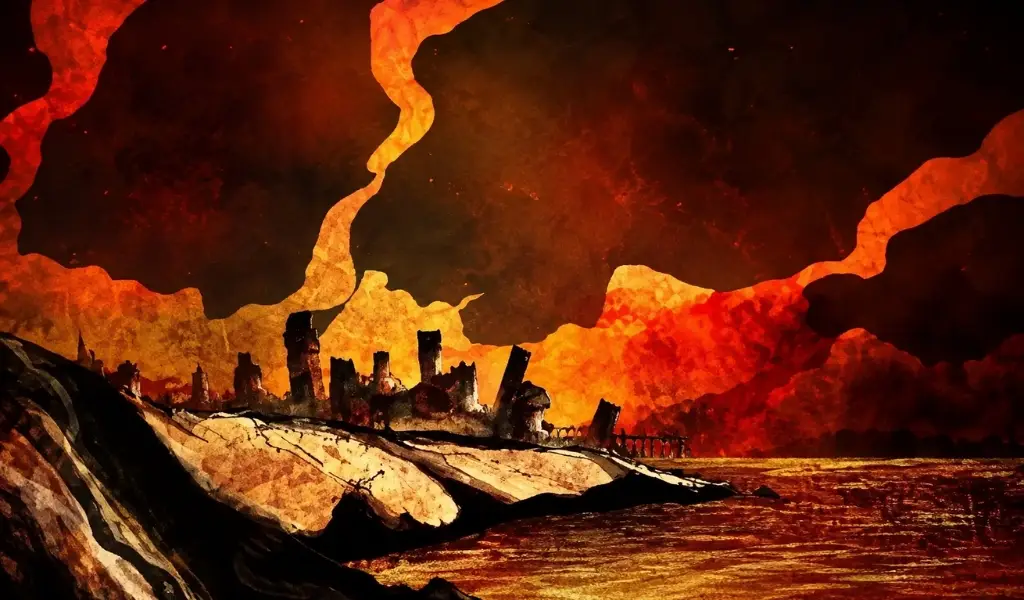
That relative obscurity turned out to be a stroke of fortune. A Targaryen ancestor named Daenys Targaryen experienced visions of an approaching catastrophe, foreseeing what would become known as the Doom of Valyria. She warned her father, Aenar, who trusted her instincts enough to relocate the family and its wealth to the Valyrian outpost of Dragonstone, just off the coast of Westeros. The Doom struck Valyria in 102 BC, roughly a century before Aegon’s Conquest, wiping out the civilisation that had birthed the Targaryens.
On Dragonstone, the family’s fortunes were tied to their surviving dragons. Aegon inherited Balerion, one of the few dragons to survive the journey from Valyria, while Meraxes and Vhagar were hatched on the island itself. Vhagar, notably, is one of the dragons featured in House of the Dragon, linking this early chapter directly to the events audiences see on screen.
Why Targaryen Descendants Have Silver Hair & Purple Eyes
The Targaryens’ most recognisable physical trait, at least in George R.R. Martin’s novels, is their striking silver hair paired with purple eyes. While the TV adaptations don’t depict the purple eyes, the books are explicit about this detail as a marker of Valyrian heritage. In The World of Ice & Fire, Martin describes the Valyrian people as famed for their beauty, with silver or gold hair and unusually coloured eyes seen as evidence that “the Valyrians are not entirely of the same blood as other men.”
Not everyone in the story accepts this explanation at face value, though. Some in-universe maesters argue the traits are less mystical than they appear, attributing them instead to generations of isolationist breeding within Valyrian noble houses. Whichever explanation one favours, the physical markers became inseparable from Targaryen identity, a visual shorthand for their claim to something rarer than ordinary Westerosi blood.
How Targaryens Bond and Ride Dragons
A common misconception is that every Targaryen can simply hop on a dragon and take flight. That isn’t the case. While Targaryens were recognised even back in Valyria as having a closer affinity with dragons than most, not every Valyrian, and not every Targaryen, is capable of forming that bond. Dragons are intelligent creatures, generally following the commands of a single rider. Once bonded, a dragon won’t allow anyone else to ride it while that rider lives, unless the original rider is present.
The connection runs deeper than obedience. Dragons and their riders appear to share a mysterious, almost empathetic link, with dragons reacting when their rider is in distress, and vice versa. What exactly makes Valyrian blood capable of this bond remains unclear, but it’s part of the reasoning behind the family’s practice of marrying within their own bloodline. Interestingly, the bond isn’t strictly limited to legitimate Targaryens: Valyrian bastards, known as “dragonseeds,” from both House Targaryen and House Velaryon, manage to claim dragons during the Dance of the Dragons. As for non-Valyrians, there’s no confirmed case of an ordinary person ever mounting a dragon, though there’s no definitive proof it’s impossible either.
Aegon’s Conquest and Aegon’s Dream Explained
Aegon’s Conquest Westeros history is arguably the single most consequential event in the story’s timeline. Riding Balerion alongside his sister-wives Visenya and Rhaenys, each with dragons of their own, Aegon the Conqueror laid siege to the independent kingdoms of Westeros. Six of the seven kingdoms fell; only Dorne successfully resisted. Following the conquest, Aegon took the name Aegon I Targaryen, founded King’s Landing and the Red Keep, and established the dynasty that would rule for close to 300 years.
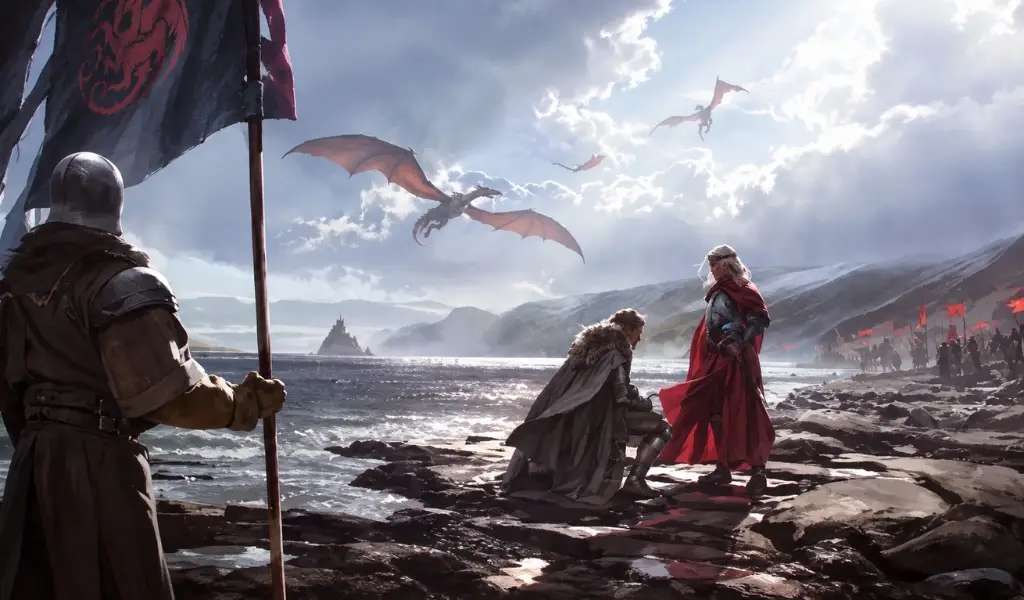
Despite its historical weight, the conquest itself wasn’t a drawn-out struggle. Aside from Dorne’s resistance, Aegon faced little real opposition, dismantling Westerosi armies and eliminating noble houses such as House Gardener along the way. The system of government later seen throughout House of the Dragon and Game of Thrones was built directly from this conquest, with Houses like Stark and Lannister brought under Targaryen rule through sheer dragon power. Dorne would eventually be added to the realm later, completing the unification of the continent under a single banner for the first time.
House of the Dragon also introduced a concept unique to the television universe: Aegon’s Dream. Explained by Viserys to Rhaenyra, the dream suggests Aegon foresaw the White Walker invasion that would define Game of Thrones centuries later, and hoped to unite the realm under a Targaryen ruler capable of facing that threat with dragonfire. As Viserys recounts it:
“Aegon foresaw the end of the world of men. It’s to begin with a terrible winter, gusting out of the distant North. Aegon saw absolute darkness riding on those winds, and whatever dwells within will destroy the world of the living. When this great winter comes, Rhaenyra, all of Westeros must stand against it. And if the world of men is to survive, a Targaryen must be seated on the Iron Throne. A King or Queen, strong enough to unite the realm against the cold and the dark. Aegon called his dream ‘The Song of Ice and Fire.'”
The prophecy exists primarily to underscore the tragedy of what comes next: a war that would squander everything Aegon’s dream was meant to protect.
The Dance of the Dragons: The Targaryen Civil War
The Dance of the Dragons civil war stands as the central subject of House of the Dragon and is chronicled extensively in Fire & Blood. To understand how it began, you have to go back to Jaehaerys I, the fourth Targaryen monarch, whose 55-year reign brought the family to the height of its power and prosperity. When it came time to settle his succession, a Great Council chose the male Viserys over Rhaenys, despite her arguably stronger claim through Jaehaerys’s lineage. Viserys I is the king audiences meet at the start of the HBO series.
Viserys I and his wife, Aemma Arryn, struggled to produce a male heir, leaving the succession caught between two candidates: Viserys’s unpredictable brother Daemon, and his daughter, Princess Rhaenyra Targaryen. Viserys ultimately named Rhaenyra his heir, but this decision predated his second marriage to Alicent Hightower, who later gave birth to a son, Aegon. Suddenly, Viserys had both a publicly declared female heir and a trueborn son who, by traditional succession law, held a stronger legal claim.
That contradiction detonated into all-out war the moment Viserys died. A plot placed Aegon on the throne, splitting the realm into two factions: the Greens, backing Aegon’s claim under the Hightower banner’s colours, and the Blacks, loyal to Viserys’s original wish that Rhaenyra succeed him. What followed was Targaryens killing Targaryens, dragons killing dragons, and the total collapse of the peace Jaehaerys had spent 55 years building.
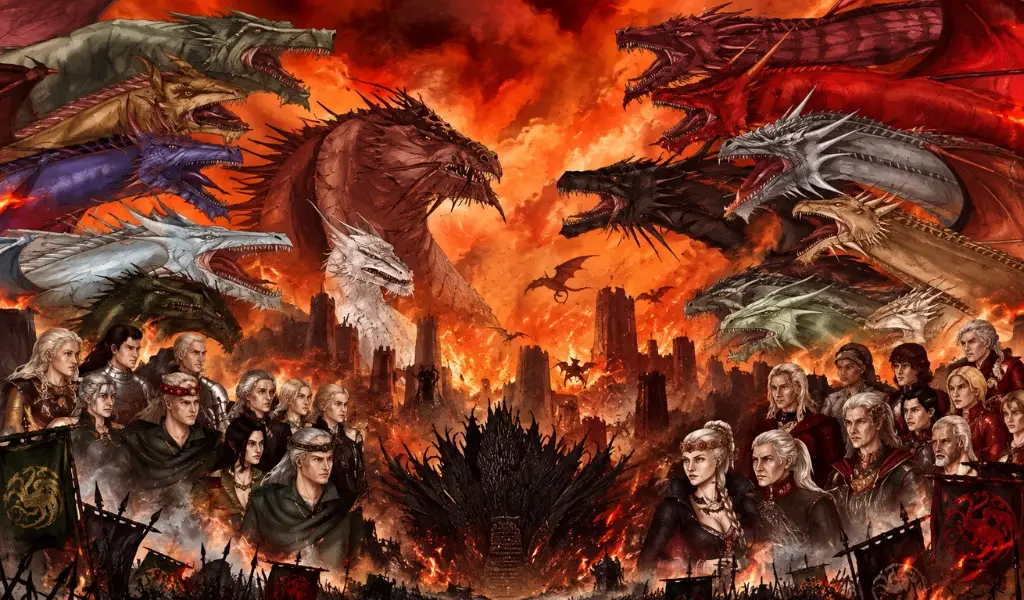
It remains one of the bloodiest and, by the story’s own framing, most needless wars in Westerosi history.
When & How The Dragons Died Out Before Game Of Thrones
If you’re wondering how did the dragons die out Game of Thrones fans have puzzled over this for years, and the answer traces directly back to the Dance of the Dragons. During the reigns of Jaehaerys and Viserys, the Targaryens maintained a structured dragon-breeding programme, hatching new eggs to keep pace with the growing Targaryen and Velaryon families. The civil war undid decades of that work almost overnight. Dragons died in combat against one another, and further losses came during the Storming of the Dragonpit, when enraged commoners in King’s Landing turned on the dragons directly.
The species didn’t vanish instantly, but the decline was swift. Roughly 20 years after the Dance of the Dragons, the last dragon in Westeros died. It belonged to King Aegon III, son of Rhaenyra and Daemon Targaryen, whose dragon died young under vague circumstances, earning him the grim nickname Dragonbane. From that point until Daenerys hatched her own eggs nearly 150 years later, dragons existed only as history, their skulls displayed as relics within the Red Keep.
The Blackfyre Rebellions and Dynastic Decline
Just over a century before Game of Thrones, House Targaryen faced another self-inflicted wound. King Aegon IV, remembered as one of the dynasty’s least respected rulers, fathered numerous bastards, one of whom, Daemon Rivers, he legitimised. Daemon took the name Daemon Blackfyre, after the ancestral Valyrian steel sword his father had given him, and founded a rival branch of the family. When Aegon IV died, this set Daemon on a collision course with the trueborn heir, Daeron.
Daeron II took the Iron Throne, and his half-brother’s rebellion followed almost immediately, marking the First Blackfyre Rebellion. Over roughly 60 years, five separate Blackfyre Rebellions erupted across the reigns of multiple Targaryen kings, each one chipping further away at the dynasty’s stability. The Blackfyres also mounted additional, less formally documented attempts on the throne during this period, compounding a century of steady decline in the run-up to Game of Thrones.
The Mad King, Robert’s Rebellion & The Fall Of House Targaryen
By the time of Aerys II, later known as the Mad King, the dynasty was already weakened by decades of internal strife. Aerys began his reign with genuine ambition, but conflict with his Hand, Tywin Lannister, combined with a six-month imprisonment during the siege of Duskendale, pushed him toward paranoia and cruelty. The spark that finally ignited rebellion was his son Rhaegar Targaryen running off with Lyanna Stark, who had already been betrothed to Robert Baratheon.
When Lord Rickon Stark and his son Brandon travelled to King’s Landing demanding Lyanna’s return, Aerys responded by burning Rickon alive and hanging Brandon in front of him. Ned Stark, Robert Baratheon, and Jon Arryn called their banners in response, and Robert’s Rebellion began in earnest. Three events from this war carry lasting significance for the Targaryen dynasty. At the Battle of the Trident, Robert Baratheon killed Rhaegar in single combat, eliminating the Mad King’s heir. At the Sack of King’s Landing, Tywin Lannister betrayed Aerys outright, storming the city and ordering the deaths of Rhaegar’s infant children, while Jaime Lannister ended the war by stabbing Aerys II in the back. Finally, at the Tower of Joy, Ned Stark found his dying sister Lyanna, taking her newborn son and raising him as his own bastard.
Daenerys Targaryen & Jon Snow: The Last Surviving Targaryens
Daenerys Targaryen, daughter of Aerys II, was conceived late in Robert’s Rebellion. Her mother and young brother Viserys fled to Dragonstone before the Sack of King’s Landing, and after Daenerys’s birth, both escaped further to Essos. Following her marriage to Khal Drogo and the death of Viserys, Daenerys claimed the mantle of Targaryen heir herself, a claim reinforced when she hatched three dragons, Drogon, Rhaegal, and Viserion. Much of her arc across Game of Thrones involves building the forces needed to reclaim Westeros, a goal she eventually achieves in taking King’s Landing.
Jon Snow’s Targaryen identity is revealed far later in the story. Raised believing he was Ned Stark’s bastard, Jon is in fact the son of Rhaegar Targaryen and Lyanna Stark. Because Rhaegar and Lyanna married in secret, Jon is technically trueborn, giving him a stronger legal claim to the Iron Throne than Daenerys. Before her death, Lyanna named him Aegon Targaryen. He never claims the throne, however; after Daenerys descends into madness, Jon kills her and is exiled to the Wall as a consequence.
Complete List of Every Known Targaryen King & Queen
For anyone after a straightforward targaryen kings and queens list, here’s the full lineage across nearly 300 years of rule, along with the nicknames that often reveal exactly how each reign was remembered:
| Targaryen Ruler | Reign | Nicknames |
| Aegon I | 1–37 AC | The Conqueror |
| Aenys I | 37–42 AC | — |
| Maegor I | 42–48 AC | The Cruel |
| Jaehaerys I | 48–103 AC | The Conciliator, The Wise |
| Viserys I | 103–129 AC | — |
| Aegon II | 129–131 AC | — |
| Aegon III | 131–157 AC | The Broken King, The Dragonbane |
| Daeron I | 157–161 AC | The Young Dragon |
| Baelor I | 161–171 AC | The Blessed |
| Viserys II | 171–172 AC | — |
| Aegon IV | 172–184 AC | The Unworthy |
| Daeron II | 184–209 AC | The Good |
| Aerys I | 209–221 AC | — |
| Maekar I | 221–233 AC | — |
| Aegon V | 233–259 AC | The Unlikely |
| Jaehaerys II | 259–262 AC | — |
| Aerys II | 262–283 AC | The Mad King |
| Daenerys I | 305 AC | — |
A Dynasty Undone by Its Own Fire
House Targaryen’s story is, in the end, one of self-destruction as much as conquest. A family that united Westeros through unmatched dragon power spent the next three centuries slowly dismantling that same strength through succession disputes, needless rebellions, and a civil war that wiped out the very creatures that had made them untouchable. By the time Daenerys and Jon Snow arrive in Game of Thrones, they’re not inheriting an empire so much as its wreckage.
With Targaryen-focused spin-offs like Aegon’s Conquest and Dunk & Egg reportedly in development, there’s clearly still appetite to explore the gaps in this timeline, from the earliest days on Dragonstone to the century of Blackfyre unrest barely touched on screen. For now, though, this history offers the clearest picture yet of how one house rose on dragonback and fell in fire.
Frequently Asked Questions
Who ended House Targaryen?
House Targaryen’s royal rule was ended by Robert Baratheon during Robert’s Rebellion, culminating in the death of King Aerys II Targaryen at the hands of Jaime Lannister.
Who is the most powerful Targaryen?
Aegon I Targaryen is widely considered the most powerful Targaryen in history because he successfully united and conquered six of the Seven Kingdoms of Westeros.
Why is House Targaryen so powerful?
House Targaryen is powerful because they were the last surviving dragonlords of Valyria, using fire-breathing dragons to conquer and unite Westeros.