

Will Ulf House of the Dragon Become More Detestable in Season 4?
Trigger warning: This article contains discussion of sex*ual assault in reference to George R.R. Martin’s Fire & Blood source material.
Few narrative tricks are as satisfying as a well-crafted villain. HBO’s Westeros adaptations spanning Game of Thrones, House of the Dragon, and A Knight of the Seven Kingdoms have perfected the art of engineering characters audiences despise with a passion. Joffrey Baratheon (Jack Gleeson), Ramsay Bolton (Iwan Rheon), Criston Cole (Fabian Frankel), Viserys Targaryen (Harry Lloyd), and Aerion Targaryen (Finn Bennett) have all taken their turn as fan-loathed figures, dating back to the franchise’s earliest days in 2011. Their eventual downfalls became some of the most celebrated moments in television history.
Now, with the season 3 finale of House of the Dragon, the franchise has a compelling new addition to that roster. Ser Ulf the White (Tom Bennett), once a figure audiences were nudged to sympathize with, crossed a line at Tumbleton that changed everything. But if George R.R. Martin’s source material, Fire & Blood, is any guide, his worst moments may still be ahead. Here’s a deep dive into Ulf’s betrayal, how the show shaped his character differently from the books, and what season 4 might have in store.
Ser Ulf the White’s Shocking Betrayal at Tumbleton
Westeros has never been short of morally compromised characters. The franchise’s longevity rests partly on its ability to make audiences care deeply and then furiously about the people populating its world. Ser Ulf the White fits squarely into that tradition, though his arc in House of the Dragon carries a particular sting because the show spent considerable time making him relatable.
Ulf’s origins are humble. A Targaryen bastard, he proved his bloodline by taming the dragon Silverwing, earning his knighthood and a place on Rhaenyra Targaryen’s (Emma D’Arcy) side as a dragonseed. For much of season 3, he operates as a soldier serving Team Black an outsider looking for belonging, struggling to navigate a court that was never built for someone like him.
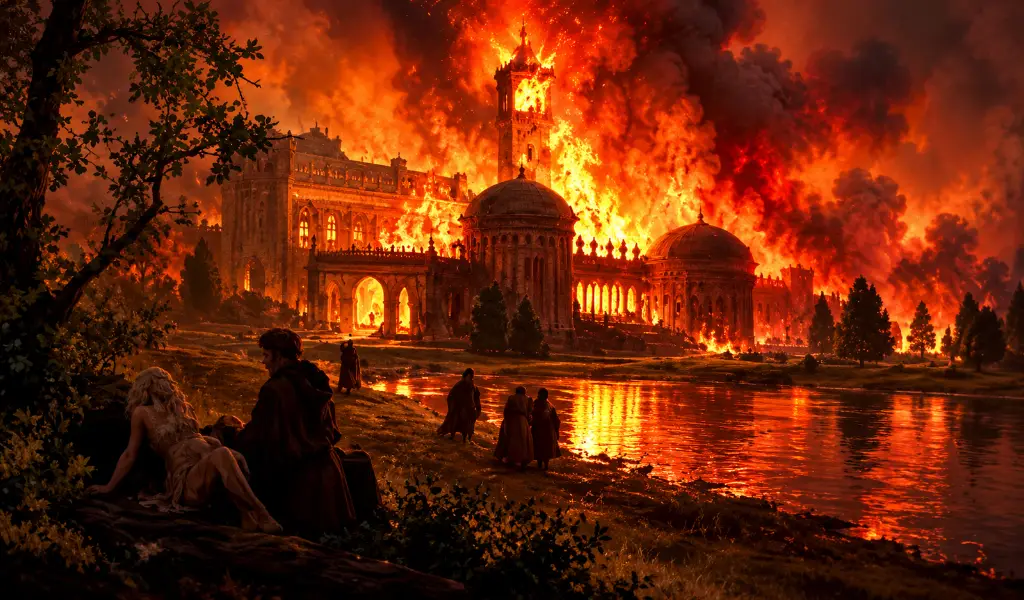
That all collapses in the season 3 finale, “The Treasons at Tumbleton.” Ulf’s betrayal striking a deal with Ormund Hightower (James Norton) and defecting to the Greens culminates in one of the season’s most harrowing set pieces. Mounted on Silverwing, Ulf razes the town of Tumbleton, killing innocent civilians indiscriminately. The scale of destruction during the Ulf and Silverwing Tumbleton battle renders his actions unconscionable, regardless of which side of the Targaryen civil war a viewer sympathizes with.

The Sack of Tumbleton and Book Differences in Fire & Blood
The Battle of Tumbleton may be where season 3 ends, but in Martin’s source material, it’s only the beginning of Ulf’s crimes.
The First Battle of Tumbleton is immediately followed by the Sack of Tumbleton, an atrocity that has not yet appeared on screen. Green soldiers continue to ravage the city long after the battle concludes, and even Prince Daeron Targaryen (Benjamin Evan Ainsworth) is unable to bring his forces to heel. Amid this chaos, Martin writes that Ulf “raped three maidens each night.”
This detail transforms the Ser Ulf the White Fire & Blood book differences into more than just a matter of tone or pacing. The show gave Ulf a conscience, a backstory, and a set of grievances that made his defection feel human, however misguided. The book affords him none of that nuance; he and fellow dragonseed Hugh Hammer (Kieran Bew) are simply labeled “the Two Betrayers,” villains whose motivations are barely explored before the narrative moves on to their destruction.
The comparison to Ramsay Bolton is hard to avoid. Game of Thrones frequently used sex*ual violence to signal a character’s total moral collapse, most notoriously in the scene depicting Bolton’s assault of Sansa Stark (Sophie Turner) on their wedding night, a moment widely criticized for its gratuitousness. If House of the Dragon follows the book precisely, Ulf risks becoming a similarly one-note monster, defined entirely by cruelty.
Why the Show Pitted Ulf in a Sympathetic Light
What makes the Ulf the White season 3 betrayal land so effectively is the buildup. Right up until the end of episode 7, “The Dragon in Winter,” Ulf’s trajectory feels genuinely tragic rather than villainous.
Consider the accumulation of indignities. His request to be styled “Ser Ulf Targaryen” , a bid for the recognition his bloodline technically warrants, is dismissed by Rhaenyra with a blunt and almost comedic “Absolutely not.” He settles for “the White” instead, a moniker that speaks to a man learning to shrink his ambitions. Then Rhaenyra bars him from visiting pubs under the justification that it makes him a target for assassins seeking to eliminate one of her dragonriders. The ban is pragmatic on paper but devastating in practice. As a lowborn bastard, Ulf has little in common with the nobility of the Red Keep. The pub is where his people are. Cutting him off from that community doesn’t protect him, it isolates him.

The breaking point comes when Daemon (Matt Smith) catches Ulf outside the Red Keep in defiance of Rhaenyra’s orders and beats him brutally. There’s no diplomacy, no discussion. Just punishment.
Put together, these moments sketch a portrait of a man who was never truly welcomed by Team Black only used. Rhaenyra and her allies treated Ulf as a military asset, a dragonrider to be deployed and controlled, rather than a person with legitimate wants and needs. His eventual meeting with Ormund Hightower doesn’t feel like a surprise. It feels like the only door left open to him.
None of this excuses what Ulf does at Tumbleton. But it does explain it, which is more than the books ever bothered to do.
Looking Ahead to Season 4: Redemption or Pure Villainy?
The Ulf the White season 4 fate question puts the House of the Dragon creative team in genuinely difficult territory. They have spent most of season 3 crafting a version of Ulf that audiences understand, if not sympathize with a character whose defection is earned through accumulated mistreatment rather than innate malice. Leaning fully into his darkest book moments now would feel like a tonal whiplash, undoing the careful character work that made his betrayal resonate so powerfully.
Then again, this is Westeros. The franchise has never been squeamish about allowing characters to fall beyond the point of redemption.
One path forward involves steering Ulf toward some form of reckoning not necessarily redemption in any clean sense, but an acknowledgment of consequence. The other follows Fire & Blood faithfully, pushing him into irredeemable territory and setting up the kind of downfall that audiences will want to see very badly.
Wherever the Ulf House of the Dragon story goes next, one thing is clear: Tom Bennett’s performance has already elevated a character who exists in Martin’s text as little more than a footnote. Season 4 will determine whether that complexity was a setup for something more or simply a more sophisticated route to the same bleak destination the books always had in mind.
Frequently Asked Questions
Is Ulf actually Targaryen?
Yes, Ulf has Targaryen blood. In House of the Dragon, he claims to be the bastard son of Prince Baelon the Brave, which would make him the half-brother of King Viserys I and Prince Daemon. While commoners and lords initially doubt his tall tales, the ultimate proof of his royal Valyrian lineage comes when he successfully claims and rides the dragon Silverwing, as dragons will not bond with someone entirely lacking the necessary bloodline.
Why did Ulf betray Rhaenyra?
Ulf the White betrayed Rhaenyra Targaryen out of deep resentment, wounded pride, and sheer greed. Raised in poverty as a commoner, claiming the dragon Silverwing inflated his ego, but Rhaenyra’s court still treated him like an embarrassing lowborn rather than a true noble, denying him high status and respect.
Why did Silverwing choose Ulf?
Silverwing chose Ulf White during the Sowing of the Seeds in House of the Dragon because of his alleged Targaryen bloodline and his non-threatening, calm presence when he stumbled into her lair on Dragonstone.
Why did Ulf and Hugh betray?
In Fire & Blood and House of the Dragon, Hugh Hammer and Ulf the White (the “Two Betrayers”) turned against Queen Rhaenyra during the Dance of the Dragons because raw power, class resentment, and immense personal ambition warped their loyalty. As lowborn commoners (“dragonseeds”) given control of massive dragons like Vermithor and Silverwing, they felt a growing disdain for the highborn nobles who still looked down on them.
Is Ulf a traitor in House of the Dragon?
Yes, Ulf the White turns into a major traitor in House of the Dragon, betraying Rhaenyra Targaryen and the Black faction during the conflict.
How did Hugh and Ulf betray Rhaenyra?
During the First Battle of Tumbleton in the Dance of the Dragons, Hugh Hammer and Ulf White betrayed Queen Rhaenyra Targaryen by turning their massive dragons—Vermithor and Silverwing—against her Black army, setting the town ablaze and defecting to the Green side.
Who killed Ulf and Hugh?
According to A Wiki of Ice and Fire, Hugh Hammer was killed by Ser Jon Roxton during the Second Battle of Tumbleton. Ulf White was poisoned shortly after by Ser Hobert Hightower, who used laced wine and died alongside him.