
The Tragedy at Summerhall: The Fire That Doomed House Targaryen
Few disasters in Westerosi history carry as much weight as the Tragedy at Summerhall. A single night of fire swallowed a king, a prince, and a legendary knight, while simultaneously ushering a new Targaryen heir into the world. That collision of birth and death has haunted the pages of George R.R. Martin’s novels for decades, and now it’s resurfacing in a different medium entirely.
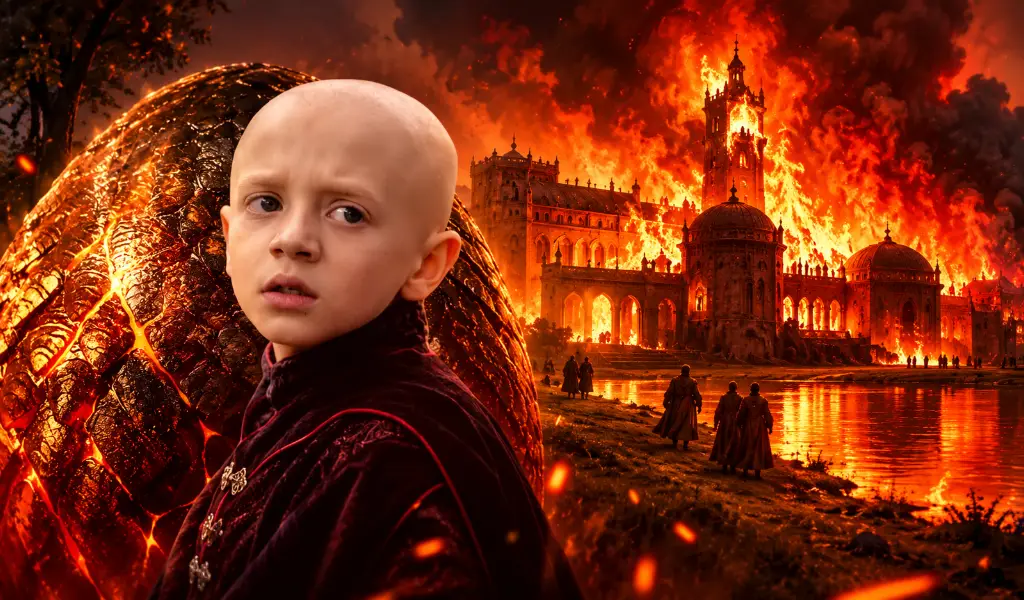
A Knight of the Seven Kingdoms, the HBO adaptation of Martin’s Dunk and Egg novellas, has reignited interest in this catastrophe by weaving it directly into its central prophecy. In the show’s third episode, a fortune teller at Ashford Meadow looks into young Egg’s future and delivers a chilling warning: he will become king, only to die in a hot fire, with worms feeding on his ashes. Fans immediately recognized the implication. This was the Tragedy at Summerhall, dramatized for the first time through prophecy rather than direct depiction.
So what actually happened during the Tragedy at Summerhall, and why does it still cast such a long shadow over the Targaryen dynasty? This breakdown walks through the historical event, the key figures caught in its wake, and how both the books and the television universe have chosen to reference without ever fully showing one of the most devastating fires in Westerosi history.
What Was the Tragedy at Summerhall?
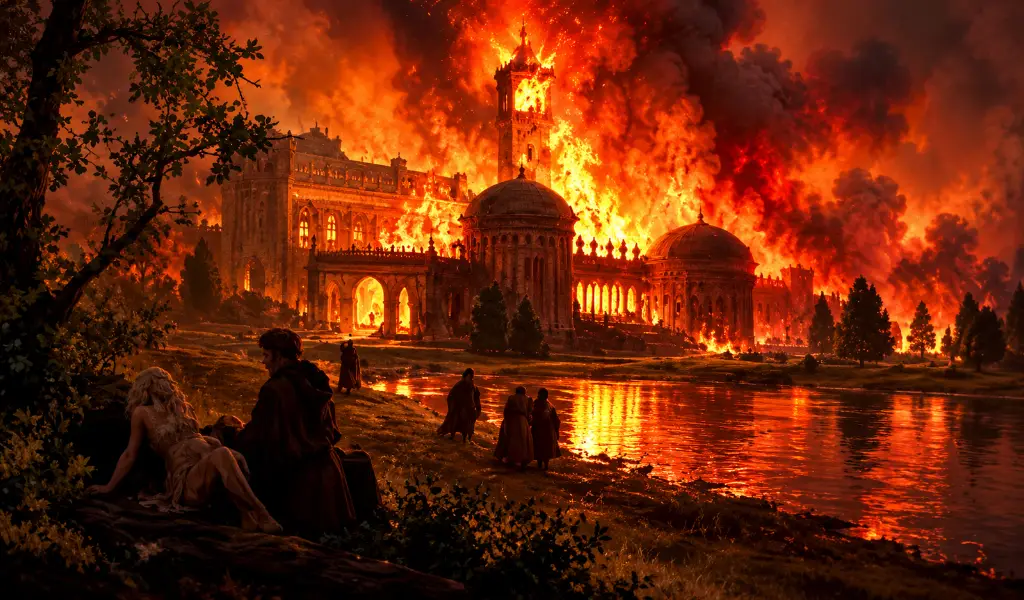
The Tragedy at Summerhall refers to a catastrophic fire that destroyed the Targaryen pleasure castle of Summerhall in 259 AC. The blaze claimed the life of King Aegon V Targaryen, along with several members of his royal court. Many believe the fire erupted during a failed attempt to bring dragons back into the world, a ritual involving dragon eggs and wildfire that spiraled catastrophically out of control.
In the novels, no character actually witnesses the disaster firsthand on the page. Instead, readers piece together what happened during the Tragedy at Summerhall through fragmented memories, mournful songs, and damaged historical records kept by maesters and survivors. These scattered accounts suggest that King Aegon V assembled dragon eggs, pyromancers, and his most trusted companions at Summerhall, all in pursuit of a prophecy tied to the return of dragons and the promised heroes of legend.
A surviving letter penned by Maester Corso offers one of the only semi-reliable glimpses into the night itself. The letter references dragon eggs, pyromancers, and wildfire, describing flames that grew far beyond anyone’s control. Unfortunately, much of the document is damaged, which has left historians and readers without a complete picture of exactly what ritual was attempted or how it went so disastrously wrong.
King Aegon V’s Dragon Hatching Obsession
By the final years of his reign, King Aegon V had grown consumed by the idea of restoring dragons to House Targaryen. He sought out ancient Valyrian dragon-breeding knowledge, reportedly sending envoys as far as Asshai in search of lost lore and magical instruction. His motivations weren’t purely about prestige or nostalgia, either. Aegon V hoped that reviving dragons would strengthen the crown’s authority and help him enforce reforms designed to protect the smallfolk, the common people he was known for championing throughout his rule.
To mark the approaching birth of his first great-grandchild, Aegon summoned members of the royal family and his most loyal companions to Summerhall. It was meant to be a moment of celebration and renewal. Instead, it became the site of one of the most devastating losses in Targaryen history.
In the television universe, the event hasn’t been shown onscreen, but it’s treated with the same gravity. A Knight of the Seven Kingdoms leans into the inevitability of the disaster through its fortune teller sequence, linking Egg’s future kingship directly to the fire he will one day cause while attempting to hatch dragon eggs.
Key Figures and the Aftermath of the Fire
The Tragedy at Summerhall touched nearly every corner of the Targaryen court, and its casualties shaped the dynasty’s trajectory for generations.
Who Died at Summerhall?
According to the books, the confirmed dead include:
- King Aegon V Targaryen – The reigning monarch, who orchestrated the dragon-hatching ritual and perished in the resulting blaze.
- Prince Duncan Targaryen – Aegon V’s eldest son and heir, known in song as the “Prince of Dragonflies,” who died alongside his father.
- Ser Duncan the Tall – Lord Commander of the Kingsguard and Aegon V’s lifelong companion since his youth, confirmed dead in the books, though he managed to save several people from the flames before the end.
- Maester Corso – The chronicler whose damaged letter remains one of the only written accounts of the disaster.
The television side of the story prophesies Aegon V’s death at Summerhall but stops short of listing every casualty in detail, leaving some of that grim bookkeeping to the novels.
The Birth of Rhaegar Targaryen
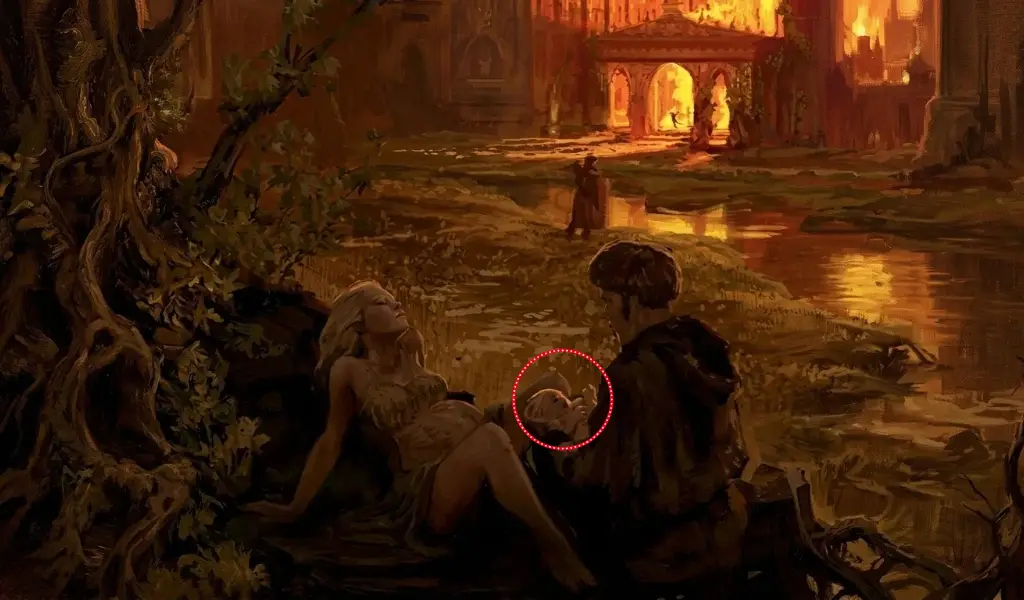
Amid the chaos, one new life entered the world. Princess Rhaella Targaryen survived the Tragedy at Summerhall and gave birth to Prince Rhaegar Targaryen on the very same night. That extraordinary coincidence, a death-soaked fire paired with a new royal birth would come to define how later generations remembered both the tragedy and Rhaegar himself.
The Line of Succession
The disaster also reshaped who sat the Iron Throne. In the book continuity, Aegon V’s death led to the ascension of his son Jaehaerys II Targaryen, who was believed to have been present and survived the disaster. The television continuity takes a different path, with the throne eventually passing to King Aerys II Targaryen, better remembered as the Mad King.
Other ripple effects followed. Ser Gerold Hightower rose to fill the void left by Ser Duncan the Tall as the new Lord Commander of the Kingsguard. Summerhall itself was left in ruins and was never restored to its former glory. Most significantly, the fire ended Aegon V’s efforts to restore dragons to the Seven Kingdoms, at least for the time being, and became a lasting symbol of Targaryen decline and the dangers of chasing prophecy through sorcery.
How Summerhall Connects to the Shows and Books
The Tragedy at Summerhall rarely takes center stage directly. Instead, it lingers in the background of nearly every major Targaryen storyline, surfacing through songs, dialogue, and private reflection.
Game of Thrones Season 4: The White Book
The clearest onscreen reference to Summerhall arrives in the Season 4 premiere, “Two Swords.” King Joffrey Baratheon taunts Ser Jaime Lannister while flipping through The Book of Brothers, commonly known as the White Book, the living record of the Kingsguard’s legacy housed in the White Sword Tower of the Red Keep. Every knight who has ever served receives a dedicated page detailing their family history, greatest deeds, and the circumstances of their death.
When Joffrey lands on the entry for Ser Duncan the Tall, the text confirms that he “perished in the mysterious fire of Summerhall with King Aegon and Prince Duncan.” It’s a small detail, but it aligns the show’s internal history directly with the novels’ account of Aegon V and his son’s deaths.
Game of Thrones Season 8: Jenny of Oldstones
The Tragedy at Summerhall resurfaces again in Season 8, Episode 2, when Podrick Payne sings a haunting rendition of “Jenny of Oldstones.” The song originates in Martin’s novels as a favorite of the Ghost of High Heart, a prophetic woods witch. It tells the story of Jenny of Oldstones, a commoner who married Prince Duncan Targaryen the Prince of Dragonflies purely for love. Duncan, his father King Aegon V, and Ser Duncan the Tall all died in the fire that consumed Summerhall. Jenny survived and reportedly haunted the ruins afterward, mourning both her lost family and her lover.
Placing the song on the eve of the Battle of Winterfell isn’t a coincidence. Both events tie back to the “Prince That Was Promised” prophecy. Summerhall represented a failed attempt to bring dragons back to save the realm, ending instead in fire and loss. The Battle of Winterfell, by contrast, became humanity’s final stand against the Night King and the White Walkers. Where Aegon V failed, Daenerys Targaryen ultimately succeeded in returning dragons to the world, fulfilling what the show refers to as “Aegon’s dream.”
A Knight of the Seven Kingdoms: The Summerhall Prophecy
A Knight of the Seven Kingdoms takes a more direct approach than its predecessor. The fortune teller’s prophecy for Egg explicitly ties his future reign to death by fire, complete with grim imagery of worms feeding on his ashes. One line, however, stands out as particularly strange: “And all who know you shall rejoice in your dying.” This phrase doesn’t appear in the source material, and its inclusion is puzzling given that Aegon V is remembered by Westerosi historians as a benevolent ruler rather than a tyrant. It seems unlikely the realm would celebrate the death of a beloved king. Many fans instead believe the “rejoicing” refers to Rhaegar’s birth, which occurred amid the same flames that claimed Aegon’s life.
Adding another layer of intrigue, actor Dexter Sol Ansell has revealed that George R.R. Martin personally told him Dunk survived the Summerhall inferno, a notable departure from the long-held assumption that the Lord Commander died alongside his king. Co-star Peter Claffey reportedly tried to keep this detail under wraps. While the disaster itself remains inevitable, Dunk’s fate in its aftermath appears to be one of the live-action adaptation’s closely guarded secrets.
References Throughout the Novels
The death of Ser Duncan the Tall at Summerhall and the broader tragedy echo repeatedly across Martin’s main series.
In A Storm of Swords, the disgraced Hand of the King Alester Florent, imprisoned in Dragonstone’s dungeons, challenges his cellmate Davos Seaworth over whether anyone learned from Summerhall. To Alester, the tragedy proves that “dreams of dragons” lead only to death, a pointed warning about Stannis Baratheon’s reliance on Melisandre. Elsewhere, Barristan Selmy, disguised as a squire, tells Daenerys Targaryen that her brother Rhaegar was born on the very day of the disaster, a “dark shadow” that shaped his lifelong melancholy. Meanwhile, the Ghost of High Heart confides in Arya Stark that she “gorged on grief” at Summerhall, mourning her friend Jenny of Oldstones.
In A Feast for Crows, a dying Maester Aemon reflects on the “Prince That Was Promised” prophecy while sailing to Braavos, recalling that the prince was said to be “born amidst salt and smoke.” Aemon once believed this described Rhaegar’s birth, inspired by the smoke of Summerhall’s flames and the salt of mourners’ tears. He later concludes that Daenerys fulfills the prophecy instead.
In A Dance with Dragons, Daenerys questions Barristan about the fate of the woods witch who prophesied the promised prince. Barristan answers with a single word “Summerhall” spoken with total doom, implying the witch died in the fire. He later reflects privately on how Aegon V’s sons broke their betrothals for love, setting off the “treason and turmoil” that culminated in their deaths at the summer palace.
As Daenerys herself once observed to Barristan Selmy, “It was the shadow of Summerhall that haunted him, was it not?” That shadow, it turns out, stretches across nearly every generation that follows.
The Lasting Legacy of Summerhall
The Tragedy at Summerhall endures as one of the defining catastrophes in Targaryen history, not because of what it showed audiences, but because of everything it left unresolved. A king’s dream of restoring dragons ended in ash. A beloved knight’s fate still hangs in question. And a prince born amid smoke and salt grew up carrying the weight of a prophecy he never asked for.
As A Knight of the Seven Kingdoms continues unpacking Dunk and Egg’s story, Summerhall looms larger with every episode. Whether the show eventually depicts the fire directly or continues to let it smolder in prophecy and memory, one thing is certain: Summerhall remains the fire that Targaryen history can’t escape.
Frequently Asked Questions
What was the Tragedy at Summerhall?
In the books, the Tragedy at Summerhall was a massive fire that destroyed the Targaryen castle of Summerhall in 259 AC during an attempt by King Aegon V to hatch dragon eggs using wildfire and possibly sorcery. In the shows, the event is referenced but has not yet been depicted onscreen.
Who died at Summerhall?
According to the books, confirmed casualties include King Aegon V Targaryen, Prince Duncan Targaryen, and Ser Duncan the Tall, the Lord Commander of the Kingsguard. The show prophesies Aegon V’s death at Summerhall but doesn’t detail every casualty.
Why was King Aegon V trying to hatch dragons?
In the books, Aegon V hoped that restoring dragons would strengthen the crown and help him enforce reforms meant to protect the smallfolk.
Who was born during the Tragedy at Summerhall?
Both the books and Game of Thrones establish that Prince Rhaegar Targaryen was born during the Tragedy at Summerhall. His birth “amidst smoke and salt” later became tied to prophecy and shaped how many characters remembered him.
Was Summerhall ever rebuilt?
Summerhall remained in ruins after the fire and was never restored. Prince Rhaegar Targaryen later visited the site alone on several occasions.